Awe dropping

iPhone 17 Pro Max im Test: Apples orangefarbener Dampfhammer

Nicolas La Rocco
278 Kommentare
iPhone 17 Pro Max im Test: Apples orangefarbener Dampfhammer

Das iPhone 17 Pro Max verpackt seine Technik in einem neuen Aluminium-Unibody und kühlt den schnelleren A19 Pro erstmals mittels Dampfkammer. Neu sind unter anderem auch das überarbeitete Teleobjektiv mit 48 Megapixeln und der größere Akku, der für längere Laufzeiten sorgt. So viel „Pro“ steckte bislang in noch keinem iPhone.

Das iPhone 17 Pro startet mit 256 GB

Apple bietet das iPhone 17 Pro und iPhone 17 Pro Max mit identischen Speichergrößen ab 256 GB an, ein 128-GB-Basismodell für die kleinere der beiden Ausführungen gibt es dieses Jahr nicht mehr. Für das größere Modell steht zudem erstmals eine Konfiguration mit 2 TB zur Auswahl. Seit dem 12. September ließen sich die neuen Modelle in Deutschland vorbestellen, im Handel stehen die Smartphones seit dem 19. September.

iPhone 17 Pro Max ab 1.449 Euro

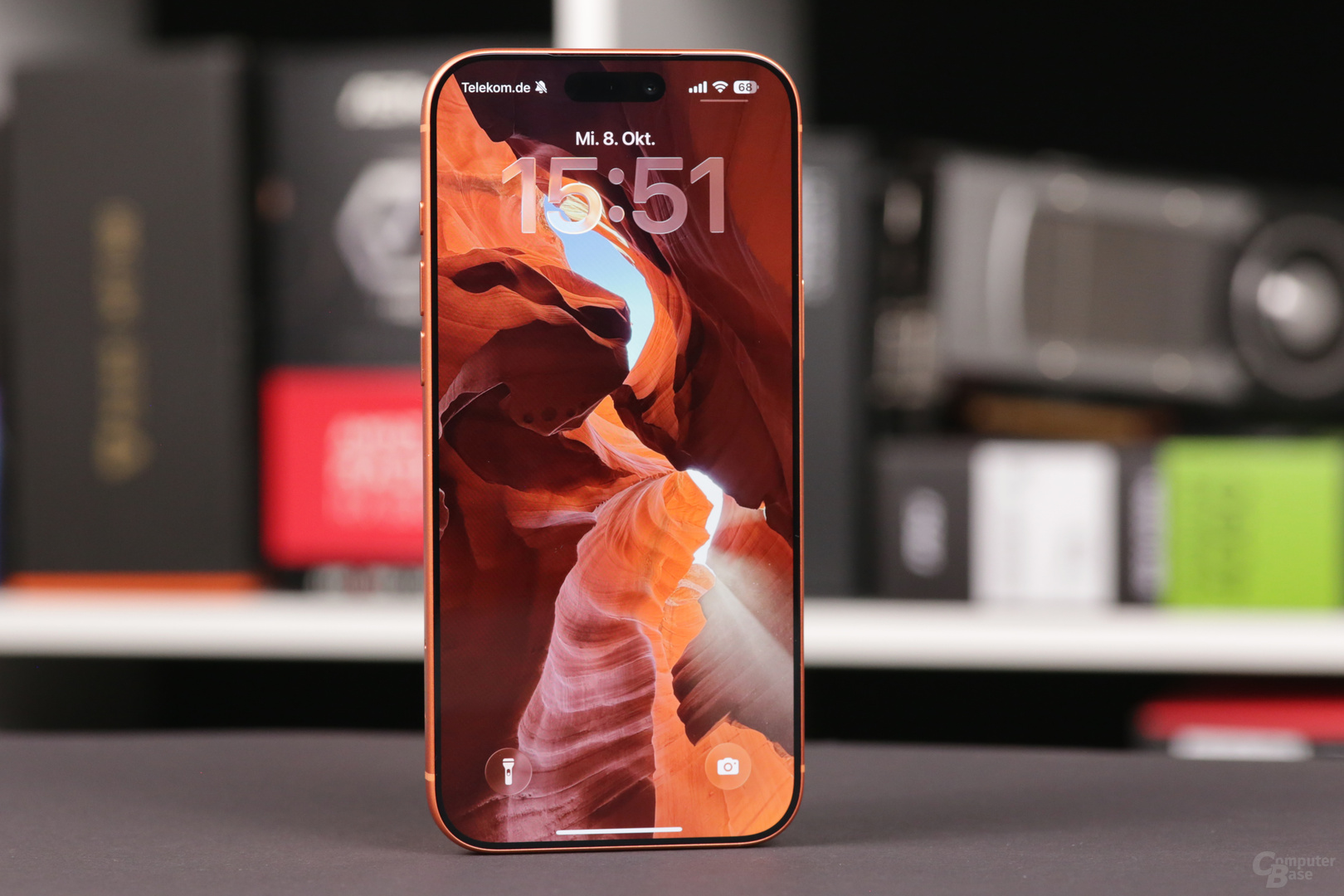
Das iPhone 17 Pro kostet 1.299 Euro (256 GB), 1.549 Euro (512 GB) und 1.799 Euro (1 TB). Das iPhone 17 Pro Max liegt bei 1.449 Euro (256 GB), 1.699 Euro (512 GB), 1.949 Euro (1 TB) und 2.449 Euro (2 TB). Für den Test lag der Redaktion ein iPhone 17 Pro Max mit 512 GB Speicher in der neuen Farbe Cosmic Orange zur Verfügung, das im Preisvergleich zum ab 1.589 Euro liegt. Deutlich weniger auffällig sind hingegen die Farben Silber und Tiefblau.

Technische Daten der iPhone-17-Familie

Apple iPhone 17 Pro Max
Apple iPhone 17 Pro
Apple iPhone Air
Apple iPhone 17
Software:
(bei Erscheinen)
iOS 26
Display: 6,90 Zoll, 1.320 × 2.868
458 ppi, 120 Hz
OLED, HDR, Ceramic Shield 2
6,30 Zoll, 1.206 × 2.622
458 ppi, 120 Hz
OLED, HDR, Ceramic Shield 2
6,50 Zoll, 1.260 × 2.736
463 ppi, 120 Hz
OLED, HDR, Ceramic Shield 2
6,30 Zoll, 1.206 × 2.622
458 ppi, 120 Hz
OLED, HDR, Ceramic Shield 2
Bedienung: Touch, Gesichtsscanner
SoC: Apple A19 Pro
2 × ?, 4,26 GHz
4 × ?, 2,60 GHz
3 nm, 64-Bit
Apple A19
2 × ?, 4,26 GHz
4 × ?, 2,60 GHz
3 nm, 64-Bit
GPU: Apple Hexa-Core
1.620 MHz
Apple Penta-Core
1.620 MHz
RAM: 12.288 MB
LPDDR5X
8.192 MB
LPDDR5X
Speicher: 256 / 512 / 1.024 / 2.048 GB 256 / 512 / 1.024 GB 256 / 512 GB
1. Kamera: 48,0 MP, 2160p
24 mm, f/1,78, AF, OIS, Nona-LED
48,0 MP, 2160p
26 mm, f/1,60, AF, OIS, Nona-LED
2. Kamera: 48,0 MP, 13 mm, f/2,20, AF Nein 48,0 MP, 13 mm, f/2,20, AF
3. Kamera: 48,0 MP, 100 mm, f/2,80, AF, OIS Nein
4. Kamera: Nein
5. Kamera: Nein
1. Frontkamera: 18,0 MP, 2160p
Display-Blitz, f/1,90, AF
2. Frontkamera: Nein
GSM: GPRS + EDGE
UMTS: HSPA+
↓42,2 ↑5,76 Mbit/s
LTE: Advanced Pro
5G: NSA/SA
WLAN: 802.11 a/b/g/n/ac/ax/be
Bluetooth: 6.0
Ortung: A-GPS, GLONASS, BeiDou, Galileo, QZSS, NavIC
Weitere Standards: USB-C 3.2, UWB, NFC USB-C 2.0, UWB, NFC
SIM-Karte: Nano-SIM, Dual-SIM eSIM, Dual-SIM Nano-SIM, Dual-SIM
Akku: 4.823 mAh, 40,0 W
fest verbaut, kabelloses Laden
3.988 mAh, 40,0 W
fest verbaut, kabelloses Laden
3.149 mAh, 30,0 W
fest verbaut, kabelloses Laden
3.692 mAh, 40,0 W
fest verbaut, kabelloses Laden
Größe (B×H×T): 78,0 × 163,4 × 8,75 mm 71,9 × 150,0 × 8,75 mm 74,7 × 156,2 × 5,64 mm 71,5 × 149,6 × 7,95 mm
Schutzart: IP68
Gewicht: 231 g 204 g 165 g 177 g
Preis: ab 1.299 € / ab 1.589 € / ab 1.763 € / ab 2.299 € ab 1.225 € / ab 1.390 € / ab 1.695 € ab 945 € / ab 1.035 € / ab 1.257 € ab 896 € / ab 1.114 €

Vier Wochen mit dem iPhone 17 Pro Max

Nach dem Erhalt des Testgeräts am 18. September standen für den Tester einmal der Snapdragon Summit 2025 und eine private Auszeit an. Zeit genug also, um sich vier Wochen ausgiebig mit dem neuen Topmodell von Apple auseinandersetzen zu können.

Ein iPhone fast wie ein MacBook

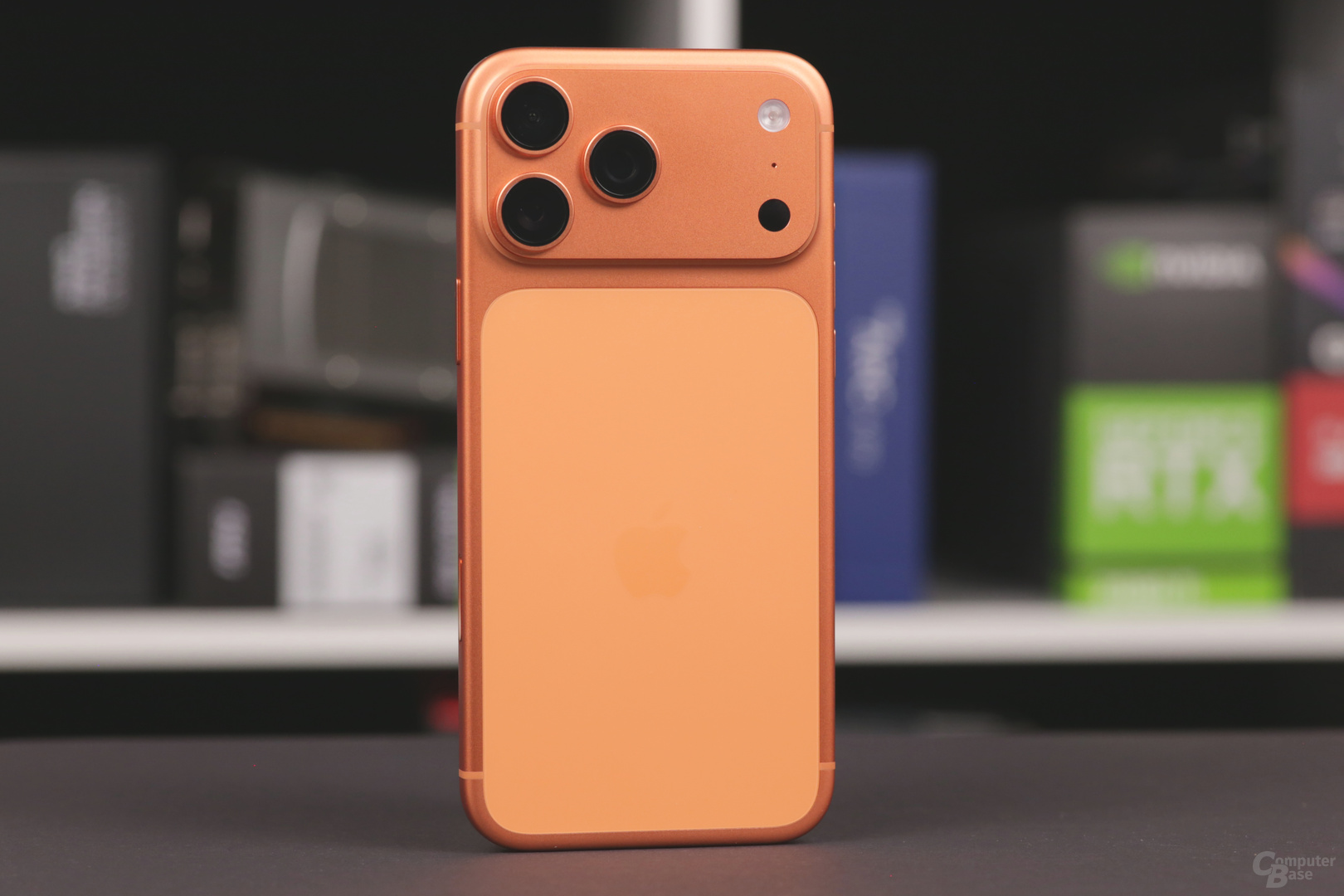
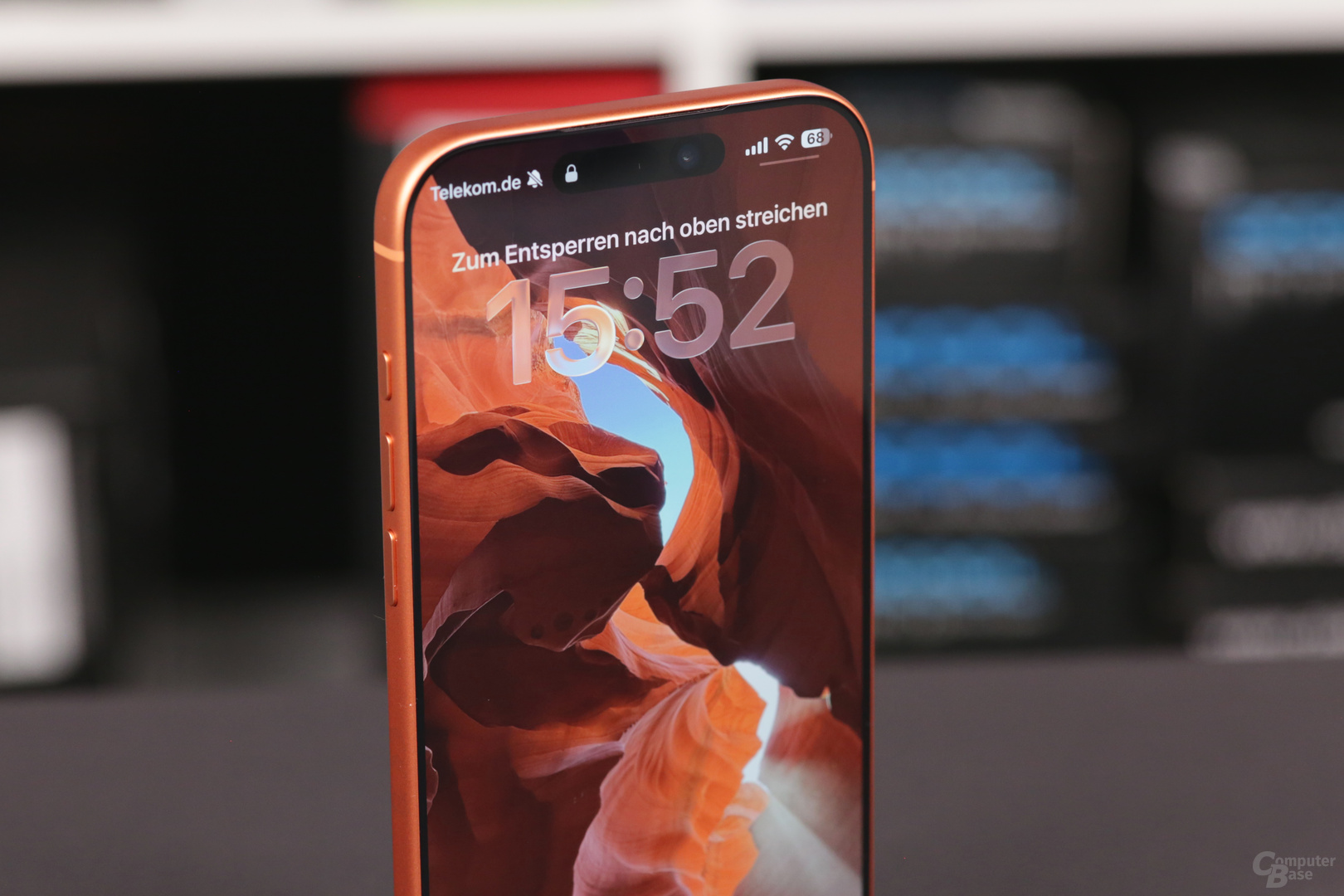
Die neue Farbe Cosmic Orange muss man mögen, oder doch zu Silber oder Tiefblau greifen. Ganz oder gar nicht lautet bei dieser Variante das Motto. Dem Tester gefiel die Farbe auf Anhieb und daran hat sich nach vier Wochen mit dem Smartphone nichts verändert. Weitaus weniger subjektiv fällt das Fazit zum neuen Aluminium-Unibody aus, der Apple zufolge eine „maximale Robustheit, Performance und Batterie­laufzeit“ ermöglichen soll. Zunächst einmal ist das neue Chassis ein wahrer Handschmeichler, der sich hochwertig anfühlt und mit seiner leichten Rundung zur Rückseite besser in der Hand liegt als das iPhone 16 Pro. Der solide Aufbau erinnert an die Unibody-Gehäuse des MacBooks.
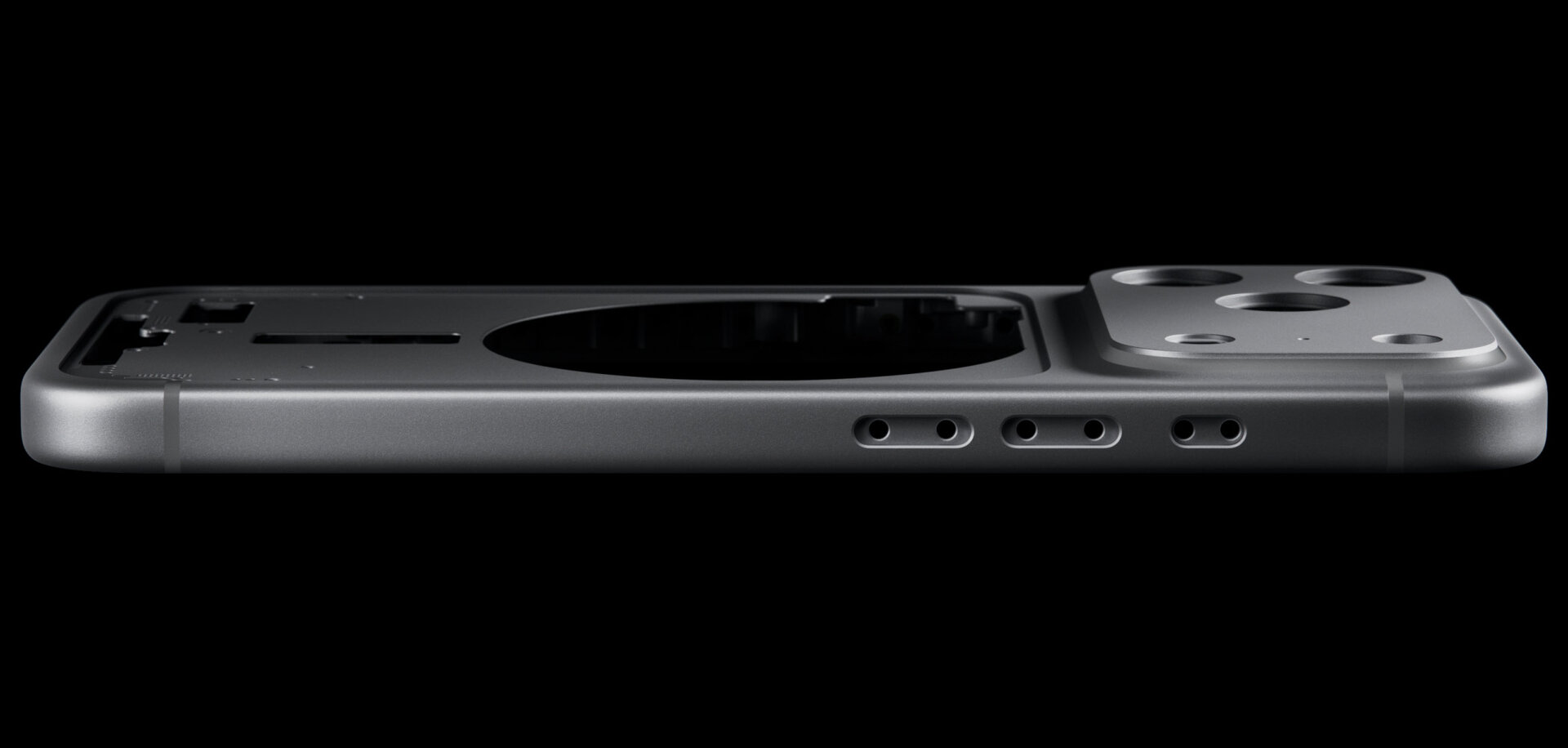
Aluminium-Unibody des iPhone 17 Pro
Aluminium-Unibody des iPhone 17 Pro (Bild: Apple)

Plateau für Kameras und Antennen

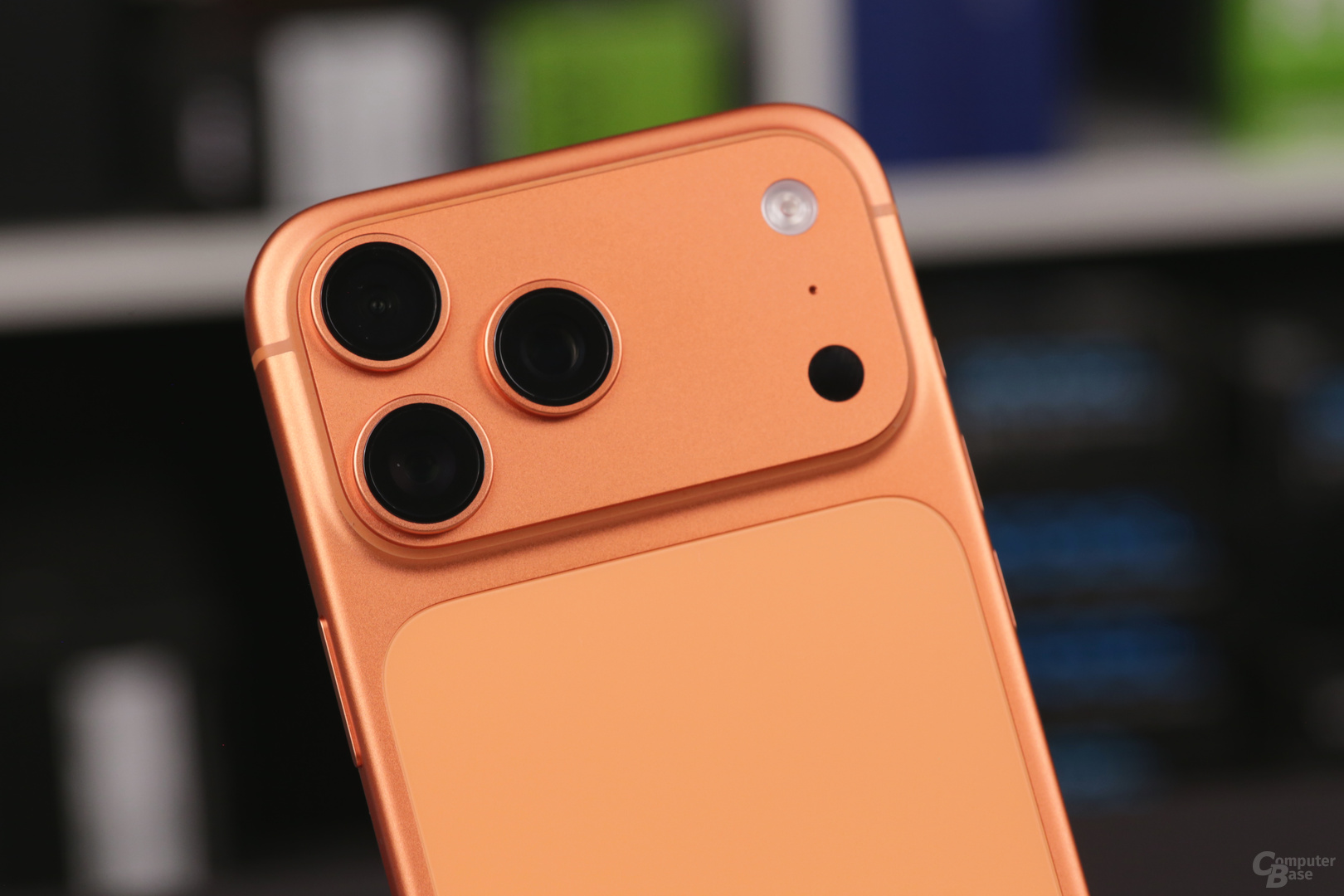
Das „Plateau“, wie Apple die vollflächige Erhebung rund um die Kameras nennt, führt darüber hinaus ein neues Antennendesign ein, wie die rundherum verlaufende Linie optisch unterstreicht, und macht das iPhone 17 Pro neben der Farbe sofort als das neue Modell von Apple erkennbar. Die Kameralinsen stehen aber noch immer etwas weiter hervor, sodass sich das Smartphone nicht ohne zu wackeln auf den Tisch legen lässt.

TechWoven schlägt FineWoven um Längen

Das wiederum ist dann aber mit dem neuen „TechWoven Case“ möglich, das sich signifikant besser als die alten FineWoven-Hüllen anfühlt und bislang keine Abnutzungserscheinungen zeigt. Das gilt mit der dauerhaften Nutzung der Hülle auch für das Smartphone selbst, dem manche ein „Scratch Gate“ vorwerfen, weil das eloxierte Gehäuse schnell verkratzen soll. Die Redaktion kann diesen Vorwurf zwar nicht nachvollziehen, denkbar sind entsprechende Abnutzungserscheinungen mit der Zeit aber durchaus, sofern gänzlich auf eine Hülle verzichtet wird.

Da vor allem das iPhone 17 Pro Max mit Abmessungen von 78,0 × 163,4 × 8,75 mm und einem Gewicht von 231 g weit entfernt von einem kompakten Smartphone ist, fällt selbst eine dickere Hülle bei der alltäglichen Nutzung praktisch nicht ins Gewicht. Das iPhone 17 Pro Max ist in der Hosentasche ein omnipräsentes Smartphone. Ganz anders das iPhone Air (Hands-on), dem jede noch so dünne Hülle auf Anhieb jegliche Magie raubt.

OLED-Display mit bis zu 3.000 cd/m²

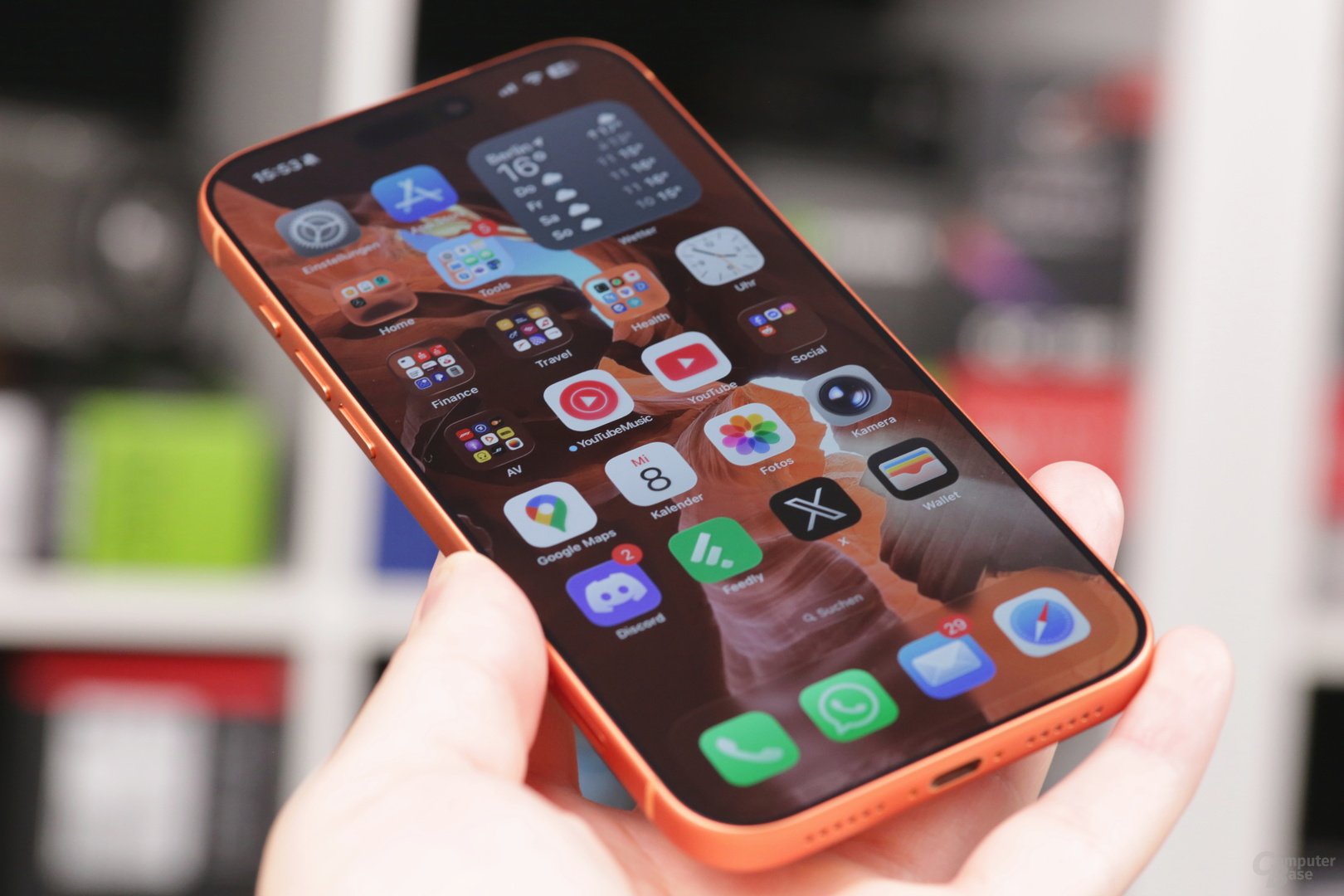
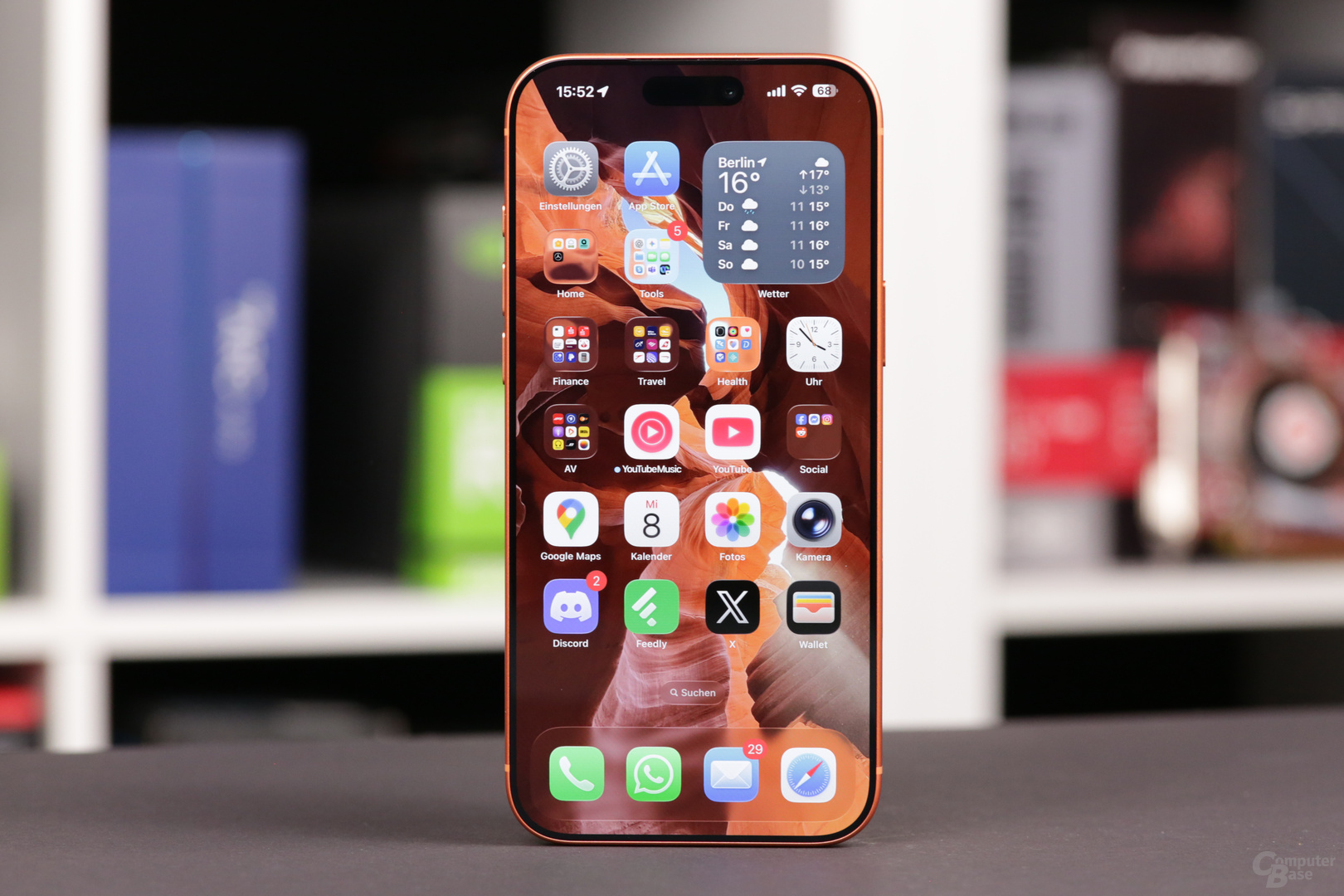
Die Größe gibt in erster Linie wieder der Bildschirm vor, den Apple für das iPhone 17 Pro Max bei den bekannten 6,9 Zoll, 1.320 × 2.868 Pixeln und 1 bis 120 Hz belässt. Was sich für den aktuellen Jahrgang allerdings verändert hat, ist die Outdoor-Helligkeit. Gemeint ist damit die Helligkeit bei hellem Umgebungslicht, was auch dann funktioniert, wenn man sich nicht draußen aufhält.

Anstelle von bis zu 2.000 cd/m² gibt Apple neuerdings bis zu 3.000 cd/m² für das iPhone 17 Pro und iPhone 17 Pro Max, iPhone 17 und iPhone Air an. Die gesteigerte Peak-Helligkeit ist somit kein exklusives Pro-Merkmal. Apples Angabe ist korrekt, sie setzt aber voraus, dass die automatische Helligkeitsregulierung aktiviert ist und entsprechend helles Umgebungslicht vorliegt, was die Redaktion mit einem hellen Fotolicht nachgestellt hat. Damit ließen sich bei einer 10-Prozent-Fläche 3.081 cd/m² ermitteln. Auf 20 Prozent des Bildschirms waren noch 2.693 cd/m² möglich und im Vollbild die vom Vorgänger bekannten 1.057 cd/m².

Diagramme
Display-Helligkeit max.
  • Automatikmodus 100% APL:
    • Apple iPhone 17 Pro Max (10% APL)
      3.081
      Weißpunkt: ca. 6.500
    • Apple iPhone 17 Pro Max (20% APL)
      2.693
      Weißpunkt: ca. 6.500
    • Google Pixel 10 Pro
      2.286
      Weißpunkt: ca. 6.500
    • Google Pixel 10 Pro XL
      2.280
      Weißpunkt: ca. 6.500
    • Google Pixel 10
      2.091
      Weißpunkt: ca. 6.600
    • Google Pixel 9 Pro XL
      2.038
      Weißpunkt: ca. 6.600
    • Google Pixel 9
      2.027
      Weißpunkt: ca. 6.600
    • Google Pixel 9a
      1.903
      Weißpunkt: ca. 7.000
    • Asus ROG Phone 9
      1.635
      Weißpunkt: ca. 7.300
    • Asus ROG Phone 8 Pro Edition
      1.603
      Weißpunkt: ca. 7.500
    • Oppo Find X8 Ultra
      1.594
      Weißpunkt: ca. 7.000
    • Huawei Pura 70 Ultra
      1.571
      Weißpunkt: ca. 6.750
    • Nothing Phone (3)
      1.546
      Weißpunkt: ca. 6.660
    • Motorola Razr 60 Ultra (außen)
      1.515
      Weißpunkt: ca. 7.100
    • Motorola Razr 60 Ultra (innen)
      1.506
      Weißpunkt: ca. 7.100
    • Samsung Galaxy S24
      1.505
      Weißpunkt: ca. 6.800
    • Samsung Galaxy Z Fold 6
      1.486
      Weißpunkt: ca. 6.900
    • Samsung Galaxy Z Flip 7
      1.468
      Weißpunkt: ca. 6.800
    • Huawei Mate X6
      1.465
      Weißpunkt: ca. 7.050
    • Samsung Galaxy S25
      1.461
      Weißpunkt: ca. 6.700
    • Redmagic 10 Pro
      1.459
      Weißpunkt: ca. 7.000
    • Samsung Galaxy Z Fold 7
      1.450
      Weißpunkt: ca. 6.800
    • Google Pixel 8 Pro
      1.440
      Weißpunkt: ca. 7.000
    • Samsung Galaxy S25 Ultra
      1.440
      Weißpunkt: ca. 6.800
    • Samsung Galaxy S24 Ultra
      1.430
      Weißpunkt: ca. 7.100
    • Google Pixel 8
      1.426
      Weißpunkt: ca. 6.900
    • Samsung Galaxy S25+
      1.424
      Weißpunkt: ca. 6.900
    • Oppo Find N5 (außen)
      1.365
      Weißpunkt: ca. 7.300
    • Samsung Galaxy S25 Edge
      1.365
      Weißpunkt: ca. 6.900
    • Nothing Phone (3a) Pro
      1.319
      Weißpunkt: ca. 6.800
    • Nothing Phone (3a)
      1.295
      Weißpunkt: ca. 6.700
    • Samsung Galaxy Z Flip 6
      1.286
      Weißpunkt: ca. 7.000
    • Oppo Find N5 (innen)
      1.227
      Weißpunkt: ca. 7.200
    • Oppo Find X8 Pro
      1.209
      Weißpunkt: ca. 7.470
    • Google Pixel Fold
      1.198
      Weißpunkt: ca. 6.200
    • Samsung Galaxy Z Fold 5
      1.196
      Weißpunkt: ca. 6.500
    • Samsung Galaxy S23
      1.193
      Weißpunkt: ca. 6.600
    • Samsung Galaxy S23 Ultra
      1.184
      Weißpunkt: ca. 6.700
    • Samsung Galaxy S22+
      1.182
      Weißpunkt: ca. 6.700
    • Apple iPhone 16e
      1.163
      Weißpunkt: ca. 6.500
    • Samsung Galaxy S22 Ultra
      1.161
      Weißpunkt: ca. 6.700
    • Apple iPhone 13 Pro
      1.063
      Weißpunkt: ca. 6.800
    • Apple iPhone 17
      1.063
      Weißpunkt: ca. 6.500
    • Apple iPhone 16
      1.062
      Weißpunkt: ca. 6.500
    • Apple iPhone 17 Pro Max (100% APL)
      1.057
      Weißpunkt: ca. 6.500
    • Apple iPhone 13 Pro Max
      1.056
      Weißpunkt: ca. 6.300
    • Apple iPhone 16 Pro Max
      1.056
      Weißpunkt: ca. 6.500
    • Apple iPhone 15
      1.054
      Weißpunkt: ca. 6.700
    • Apple iPhone 15 Pro Max
      1.052
      Weißpunkt: ca. 6.700
    • Apple iPhone 14 Pro Max
      1.049
      Weißpunkt: ca. 6.300
    • Xiaomi 15
      1.047
      Weißpunkt: ca. 7.400
    • Apple iPhone Air
      1.040
      Weißpunkt: ca. 6.500
    • Nothing Phone (2a)
      1.032
      Weißpunkt: ca. 6.500
    • Nothing Phone (2)
      1.022
      Weißpunkt: ca. 6.100
    • Asus ROG Phone 7 Ultimate
      1.013
      Weißpunkt: ca. 7.300
    • Samsung Galaxy A54
      1.012
      Weißpunkt: ca. 7.100
    • Google Pixel 7a
      1.009
      Weißpunkt: ca. 6.300
    • Motorola Razr 40
      1.007
      Weißpunkt: ca. 6.800
    • Samsung Galaxy Z Fold 4
      1.004
      Weißpunkt: ca. 6.700
    • Google Pixel 7 Pro
      990
      Weißpunkt: ca. 6.400
    • Samsung Galaxy S21 Ultra
      973
      Weißpunkt: ca. 6.700
    • Samsung Galaxy Note 20 Ultra
      969
      Weißpunkt: ca. 7.300
    • Google Pixel 7
      927
      Weißpunkt: ca. 6.200
    • Samsung Galaxy S22
      911
      Weißpunkt: ca. 6.800
    • Samsung Galaxy Z Flip 5
      905
      Weißpunkt: ca. 6.500
    • Samsung Galaxy Z Flip 3
      894
      Weißpunkt: ca. 6.600
    • Xiaomi Mi 11 Ultra
      878
      Weißpunkt: ca. 7.100
    • Samsung Galaxy Z Flip 4
      873
      Weißpunkt: ca. 6.600
    • Apple iPhone 14
      866
      Weißpunkt: ca. 6.300
    • Apple iPhone 13 mini
      858
      Weißpunkt: ca. 6.200
    • Apple iPhone 12 Pro Max
      854
      Weißpunkt: ca. 6.300
    • Apple iPhone 12 Pro
      842
      Weißpunkt: ca. 6.300
    • Google Pixel 6a
      816
      Weißpunkt: ca. 6.500
    • Fairphone 5
      803
      Weißpunkt: ca. 6.900
    • Apple iPhone 11 Pro Max
      797
      Weißpunkt: ca. 6.900
    • OnePlus 9 Pro
      787
      Weißpunkt: ca. 6.800
    • Asus ROG Phone 6
      784
      Weißpunkt: ca. 7.200
    • Xiaomi Mi 11
      783
      Weißpunkt: ca. 6.900
    • Blackview Hero 10
      778
      Weißpunkt: ca. 6.950
    • Google Pixel 6 Pro
      777
      Weißpunkt: ca. 6.500
    • OnePlus 9
      776
      Weißpunkt: ca. 6.700
    • OnePlus 8 Pro
      773
      Weißpunkt: ca. 7.400
    • Samsung Galaxy A52 5G
      772
      Weißpunkt: ca. 6.800
    • Google Pixel 6
      769
      Weißpunkt: ca. 6.200
    • Qualcomm Smartphone for Snapdragon Insiders
      765
      Weißpunkt: ca. 7.200
    • Samsung Galaxy S20
      763
      Weißpunkt: ca. 7.200
    • Samsung Galaxy S20 Ultra
      762
      Weißpunkt: ca. 7.200
    • Asus Zenfone 9
      757
      Weißpunkt: ca. 7.100
    • OnePlus 8T
      753
      Weißpunkt: ca. 6.800
    • Samsung Galaxy S20+
      752
      Weißpunkt: ca. 7.300
    • Fairphone 6
      746
      Weißpunkt: ca. 6.570
    • Oppo Find X3 Pro
      745
      Weißpunkt: ca. 7.200
    • Unihertz Titan
      718
      Weißpunkt: ca. 6.900
    • Google Pixel 4a
      701
      Weißpunkt: ca. 7.000
    • LG Wing
      688
      Weißpunkt: ca. 7.200
    • Google Pixel 5
      687
      Weißpunkt: ca. 6.500
    • Apple iPhone Xr
      686
      Weißpunkt: ca. 7.000
    • Cat S61
      672
      Weißpunkt: ca. 7.400
    • OnePlus 7T
      672
      Weißpunkt: ca. 7.300
    • Samsung Galaxy Z Fold 2
      672
      Weißpunkt: ca. 7.400
    • Gigaset GX290
      671
      Weißpunkt: ca. 9.800
    • Apple iPhone 11
      661
      Weißpunkt: ca. 6.800
    • Google Pixel 4a 5G
      655
      Weißpunkt: ca. 6.600
    • Apple iPhone 12
      653
      Weißpunkt: ca. 6.300
    • Apple iPhone Xs Max
      644
      Weißpunkt: ca. 6.900
    • Apple iPhone 12 mini
      643
      Weißpunkt: ca. 6.300
    • Nothing Phone (1)
      643
      Weißpunkt: ca. 6.100
    • Samsung Galaxy Note 9
      637
      Weißpunkt: ca. 7.800
    • Motorola Moto G8 Plus
      634
      Weißpunkt: ca. 7.700
    • OnePlus Nord
      629
      Weißpunkt: ca. 7.400
    • Samsung Galaxy S9+
      624
      Weißpunkt: ca. 7.800
    • Samsung Galaxy S9
      622
      Weißpunkt: ca. 7.700
    • Huawei Mate 20 Pro
      616
      Weißpunkt: ca. 7.300
    • Samsung Galaxy Note 10+
      616
      Weißpunkt: ca. 7.200
    • OnePlus Nord 2
      610
      Weißpunkt: ca. 7.100
    • OnePlus 6
      607
      Weißpunkt: ca. 7.900
    • Nokia XR20
      592
      Weißpunkt: ca. 8.150
    • Motorola Moto G6
      589
      Weißpunkt: ca. 8.800
    • OnePlus 7 Pro
      585
      Weißpunkt: ca. 7.300
    • LG Velvet
      575
      Weißpunkt: ca. 7.800
    • Samsung Galaxy XCover6 Pro
      575
      Weißpunkt: ca. 7.500
    • Sony Xperia XZ3
      569
      Weißpunkt: ca. 7.900
    • Sony Xperia 5 III
      563
      Weißpunkt: ca. 7.200
    • Samsung Galaxy S10e
      562
      Weißpunkt: ca. 7.400
    • Cat S52
      553
      Weißpunkt: ca. 6.900
    • LG G7 ThinQ
      546
      Weißpunkt: ca. 9.300
    • Cat S62 Pro
      543
      Weißpunkt: ca. 8.650
    • Sony Xperia 1 II
      539
      Weißpunkt: ca. 8.400
    • Sony Xperia 5 II
      536
      Weißpunkt: ca. 7.500
    • Huawei P30 Pro
      531
      Weißpunkt: ca. 7.800
    • Huawei P20 Pro
      527
      Weißpunkt: ca. 6.900
    • Asus ZenFone 6
      525
      Weißpunkt: ca. 7.400
    • Samsung Galaxy S10+
      524
      Weißpunkt: ca. 7.200
    • Oppo Reno2
      521
      Weißpunkt: ca. 8.000
    • Samsung Galaxy S10
      519
      Weißpunkt: ca. 7.200
    • Motorola Moto G7 Plus
      518
      Weißpunkt: ca. 8.200
    • Huawei P40 Pro
      516
      Weißpunkt: ca. 7.500
    • Samsung Galaxy A50
      515
      Weißpunkt: ca. 7.100
    • Motorola One Vision
      510
      Weißpunkt: ca. 8.000
    • Cat S42
      510
      Weißpunkt: ca. 6.900
    • Oppo A91
      508
      Weißpunkt: ca. 7.600
    • Doogee V20
      508
      Weißpunkt: ca. 8.690
    • Sony Xperia XZ2 Compact
      506
      Weißpunkt: ca. 7.900
    • Motorola Moto G7 Power
      506
      Weißpunkt: ca. 6.900
    • Vivo X60 Pro
      503
      Weißpunkt: ca. 7.600
    • Gigaset GS4
      501
      Weißpunkt: ca. 9.700
    • Oppo Find X2 Pro
      482
      Weißpunkt: ca. 7.900
    • Nokia 7 Plus
      473
      Weißpunkt: ca. 7.800
    • Motorola Moto G7
      473
      Weißpunkt: ca. 7.900
    • Xiaomi Mi Mix 2S
      472
      Weißpunkt: ca. 7.800
    • Motorola One
      470
      Weißpunkt: ca. 7.700
    • Telekom T Phone 2
      465
      Weißpunkt: ca. 8.360
    • Samsung Galaxy A6
      463
      Weißpunkt: ca. 8.100
    • Gigaset GS5
      456
      Weißpunkt: ca. 8.385
    • LG G8s
      455
      Weißpunkt: ca. 7.800
    • Nokia 6.1
      452
      Weißpunkt: ca. 9.500
    • Motorola Moto Z3 Play
      444
      Weißpunkt: ca. 7.500
    • OnePlus 6T
      431
      Weißpunkt: ca. 8.100
    • Google Pixel 4 XL
      428
      Weißpunkt: ca. 6.900
    • BlackBerry Key2
      420
      Weißpunkt: ca. 7.800
    • Google Pixel 3a
      406
      Weißpunkt: ca. 6.900
    • Google Pixel 3 XL
      400
      Weißpunkt: ca. 7.200
    • HTC U12+
      399
      Weißpunkt: ca. 7.500
    • Sony Xperia 1
      381
      Weißpunkt: ca. 7.600

Google bleibt die Messlatte im Vollbildmodus

An die Vollbildwerte von Google, die bei über 2.000 cd/m² bei 100 Prozent Weißfläche liegen, kommt Apple nicht heran. Die Ablesbarkeit des Bildschirms bei hellem Umgebungslicht fällt dennoch etwas besser als beim iPhone 16 Pro Max aus. Zumal Apple auch dieses Jahr wieder perfekt ab Werk kalibrierte OLED-Displays verbaut, die keinerlei Kritik an der allgemeinen Bildqualität zulassen. Im iPhone 17 Pro (Max) erhalten Käufer einen der besten Smartphone-Bildschirme am Markt.

Etwas bessere Antireflex-Beschich­tung

Laut Apple soll eine neue Antireflex-Beschich­tung zudem Spiegelungen im Vergleich zum iPhone 16 Pro (Max) minimieren. Das trifft im Direktvergleich auch zu, wenngleich das exklusiv von Samsung im Galaxy S25 Ultra (Test) verbaute Corning Gorilla Armor noch besser abschneidet. Apples Ceramic Shield 2 soll den Bildschirm vor Kratzern und Brüchen schützen, explizit dahingehend getestet hat die Redaktion das Schutzglas aber nicht. Gebrauchsspuren zeigt das Smartphone bislang nicht.

📊 Intel, AMD oder Nvidia? Mach' jetzt noch mit bei unserer großen Jahresumfrage!