Awe dropping

Apple iPhone 17 im Test: Das beste iPhone-Upgrade seit Jahren

Nicolas La Rocco
314 Kommentare
Apple iPhone 17 im Test: Das beste iPhone-Upgrade seit Jahren

Das iPhone 17 stellt im Test ein deutlich besseres Gesamtpaket als das iPhone 16 dar. Für 949 Euro erhalten Käufer endlich ein ProMotion-Display mit 120 Hz und 256 GB Storage. Hinzu kommen ein schnellerer Prozessor, längere Akkulaufzeiten und eine neue Ultraweitwinkel- und Selfie-Kamera. Damit ist das iPhone 17 empfehlenswert.

Mehr Ausstattung zum Preis wie vor zwei Jahren

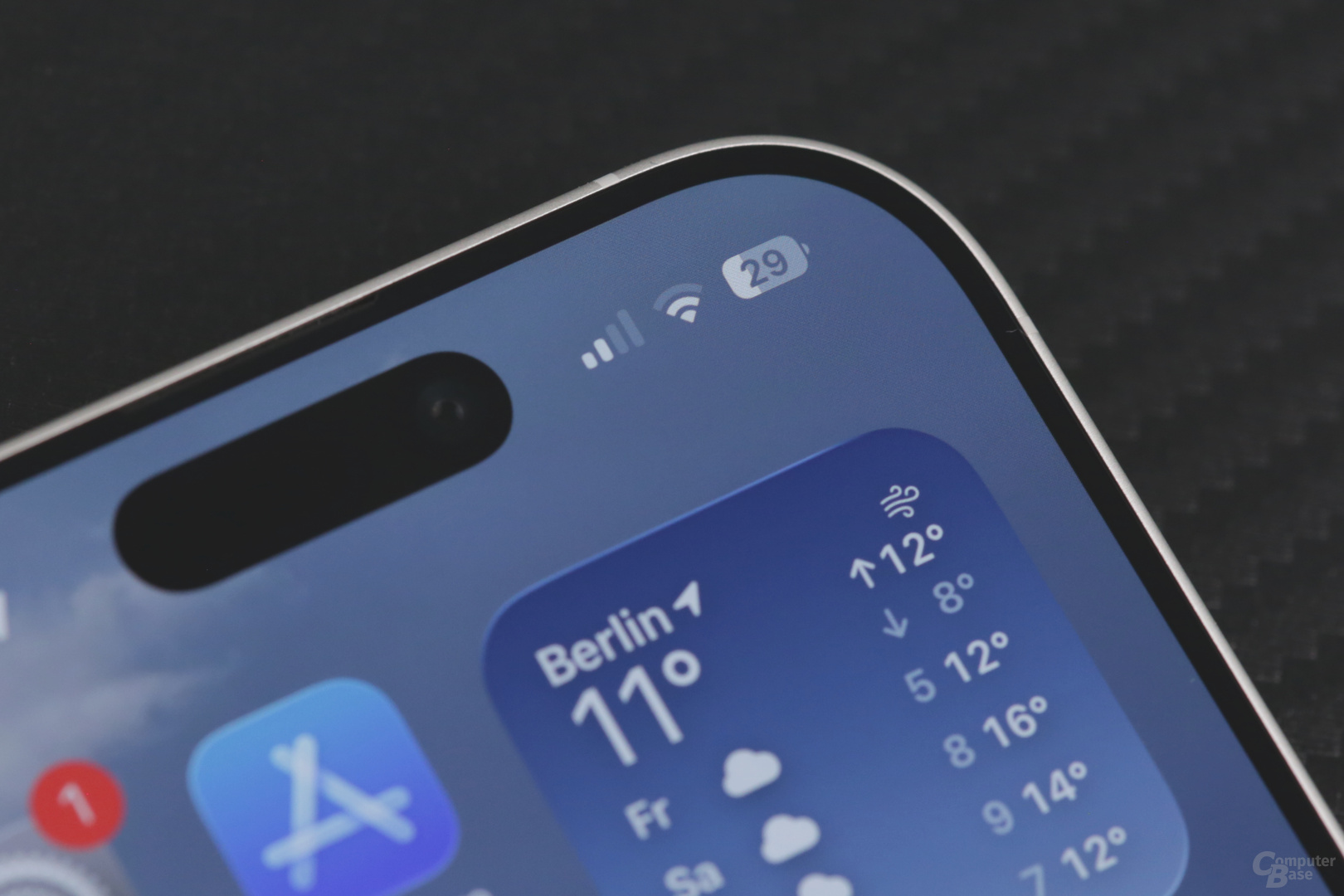
Das iPhone 17 könnte so etwas wie der Geheimfavorit im aktuellen Portfolio von Apple sein. Es hat mit 949 Euro den Einstiegspreis des iPhone 16 und iPhone 15 behalten. Dennoch kommt es im Basismodell mit 256 GB Storage und damit doppelt so viel wie bislang. Nach vielen Jahren der Kritik hat es zudem endlich ein Bildschirm mit „ProMotion“, also mit bis zu 120 Hz schnellem OLED-Panel in das Smartphone geschafft. Und dabei kommt nicht irgendein Display mit weniger Features zum Einsatz, sondern eines baugleich und mit Feature-Parität zum iPhone 17 Pro (Test) und iPhone Air.

Fünf Farben stehen zur Auswahl

In Deutschland ließ sich das iPhone 17 seit dem 12. September vorbestellen, seit 19. September ist es erhältlich. Apple bietet das Smartphone in den Farben Lavendel, Salbei, Nebelblau, Weiß und Schwarz an. Die unverbindliche Preisempfehlung liegt bei 949 Euro mit 256 GB und 1.199 Euro mit 512 GB. Im Preisvergleich ist das iPhone 17 derzeit ab 896 Euro und ab 1.114 Euro zu finden.

512 GB Speicher kosten 130 Euro weniger

Vor einem Jahr waren 949 Euro der Einstiegspreis für das iPhone 16 mit 128 GB. 256 GB lagen bei 1.079 Euro und 512 GB bei 1.329 Euro. Die größte Konfiguration kostet dieses Jahr somit 130 Euro weniger. Im Preisvergleich sind die Preise des Vorgängers zwischenzeitlich auf ab 708 Euro, ab 799 Euro und ab 1.000 Euro gefallen. Das iPhone 15 kostete vor zwei Jahren ebenfalls ab 949 Euro, das iPhone 14 ab 999 Euro und das iPhone 13 ab 899 Euro – stets mit 128 GB.

Technische Daten des iPhone 17

Apple iPhone 17
Apple iPhone Air
Apple iPhone 17 Pro
Software:
(bei Erscheinen)
iOS 26
Display: 6,30 Zoll, 1.206 × 2.622
458 ppi, 120 Hz
OLED, HDR, Ceramic Shield 2
6,50 Zoll, 1.260 × 2.736
463 ppi, 120 Hz
OLED, HDR, Ceramic Shield 2
6,30 Zoll, 1.206 × 2.622
458 ppi, 120 Hz
OLED, HDR, Ceramic Shield 2
Bedienung: Touch, Gesichtsscanner
SoC: Apple A19
2 × ?, 4,26 GHz
4 × ?, 2,60 GHz
3 nm, 64-Bit
Apple A19 Pro
2 × ?, 4,26 GHz
4 × ?, 2,60 GHz
3 nm, 64-Bit
GPU: Apple Penta-Core
1.620 MHz
Apple Hexa-Core
1.620 MHz
RAM: 8.192 MB
LPDDR5X
12.288 MB
LPDDR5X
Speicher: 256 / 512 GB 256 / 512 / 1.024 GB
1. Kamera: 48,0 MP, 2160p
26 mm, f/1,60, AF, OIS, Nona-LED
48,0 MP, 2160p
24 mm, f/1,78, AF, OIS, Nona-LED
2. Kamera: 48,0 MP, 13 mm, f/2,20, AF Nein 48,0 MP, 13 mm, f/2,20, AF
3. Kamera: Nein 48,0 MP, 100 mm, f/2,80, AF, OIS
4. Kamera: Nein
5. Kamera: Nein
1. Frontkamera: 18,0 MP, 2160p
Display-Blitz, f/1,90, AF
2. Frontkamera: Nein
GSM: GPRS + EDGE
UMTS: HSPA+
↓42,2 ↑5,76 Mbit/s
LTE: Advanced Pro
5G: NSA/SA
WLAN: 802.11 a/b/g/n/ac/ax/be
Bluetooth: 6.0
Ortung: A-GPS, GLONASS, BeiDou, Galileo, QZSS, NavIC
Weitere Standards: USB-C 2.0, UWB, NFC USB-C 3.2, UWB, NFC
SIM-Karte: Nano-SIM, Dual-SIM eSIM, Dual-SIM Nano-SIM, Dual-SIM
Akku: 3.692 mAh, 40,0 W
fest verbaut, kabelloses Laden
3.149 mAh, 30,0 W
fest verbaut, kabelloses Laden
3.988 mAh, 40,0 W
fest verbaut, kabelloses Laden
Größe (B×H×T): 71,5 × 149,6 × 7,95 mm 74,7 × 156,2 × 5,64 mm 71,9 × 150,0 × 8,75 mm
Schutzart: IP68
Gewicht: 177 g 165 g 204 g
Preis: ab 896 € / ab 1.114 € ab 945 € / ab 1.035 € / ab 1.257 € ab 1.225 € / ab 1.390 € / ab 1.695 €

Apple setzt bekanntes Design fort

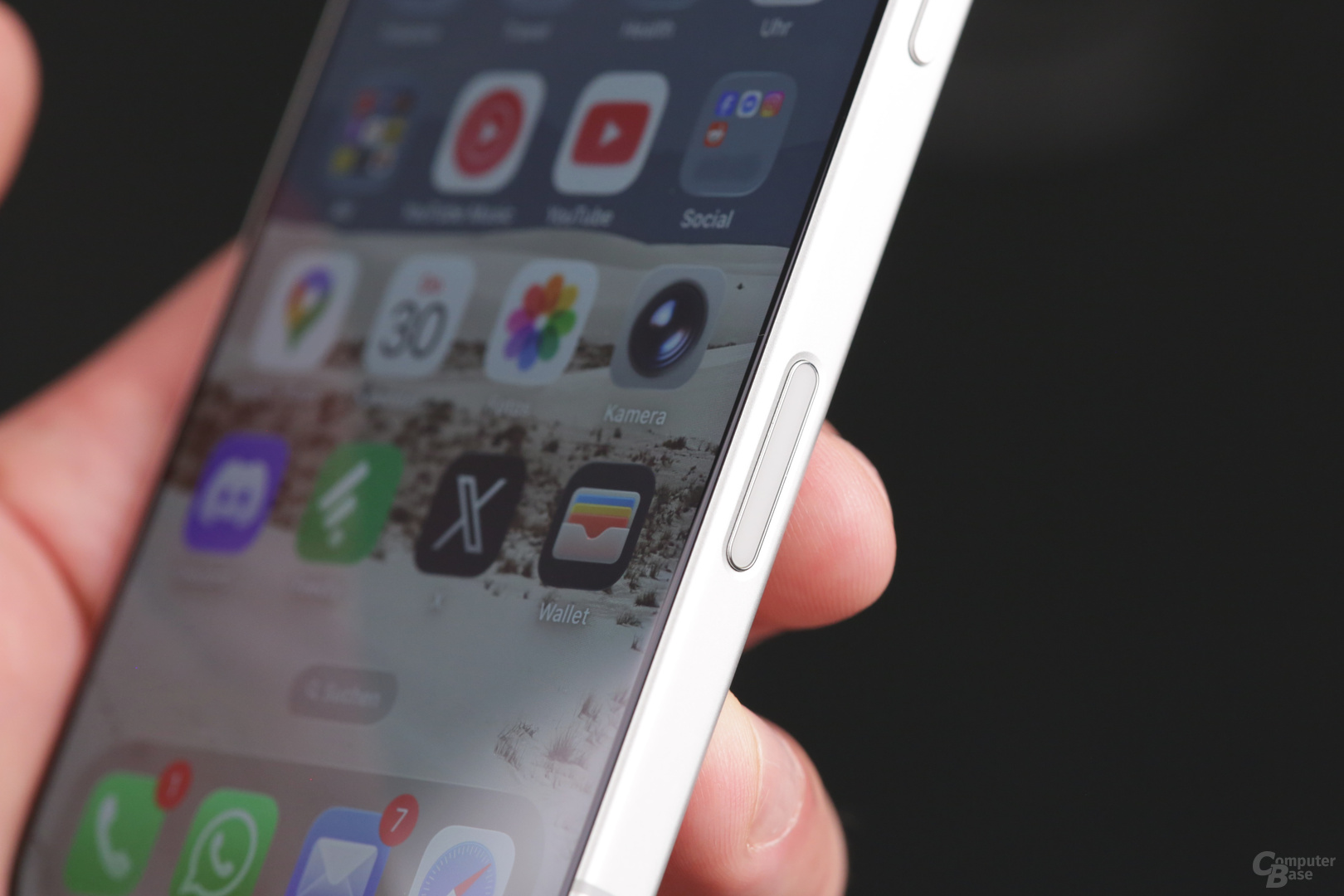
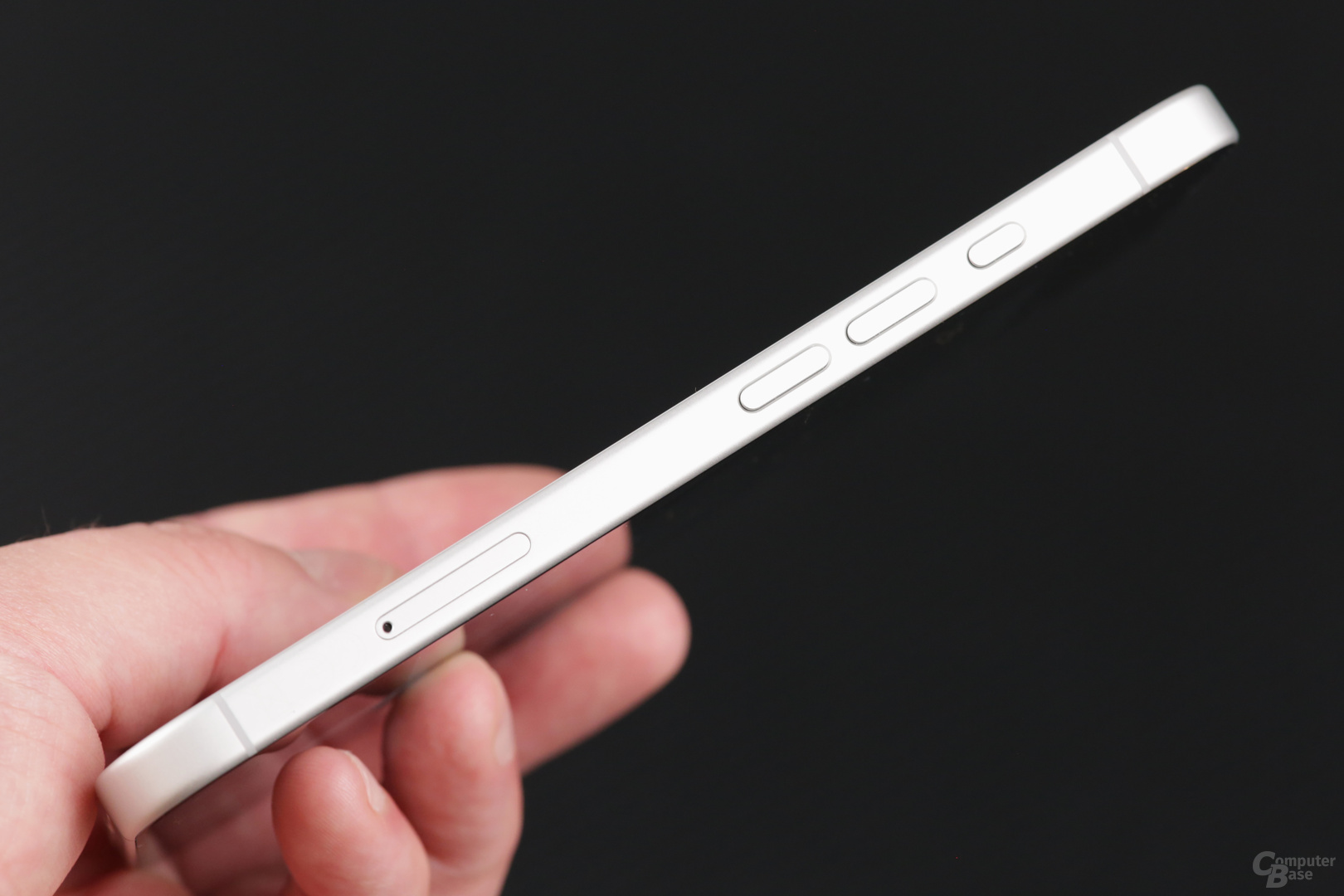
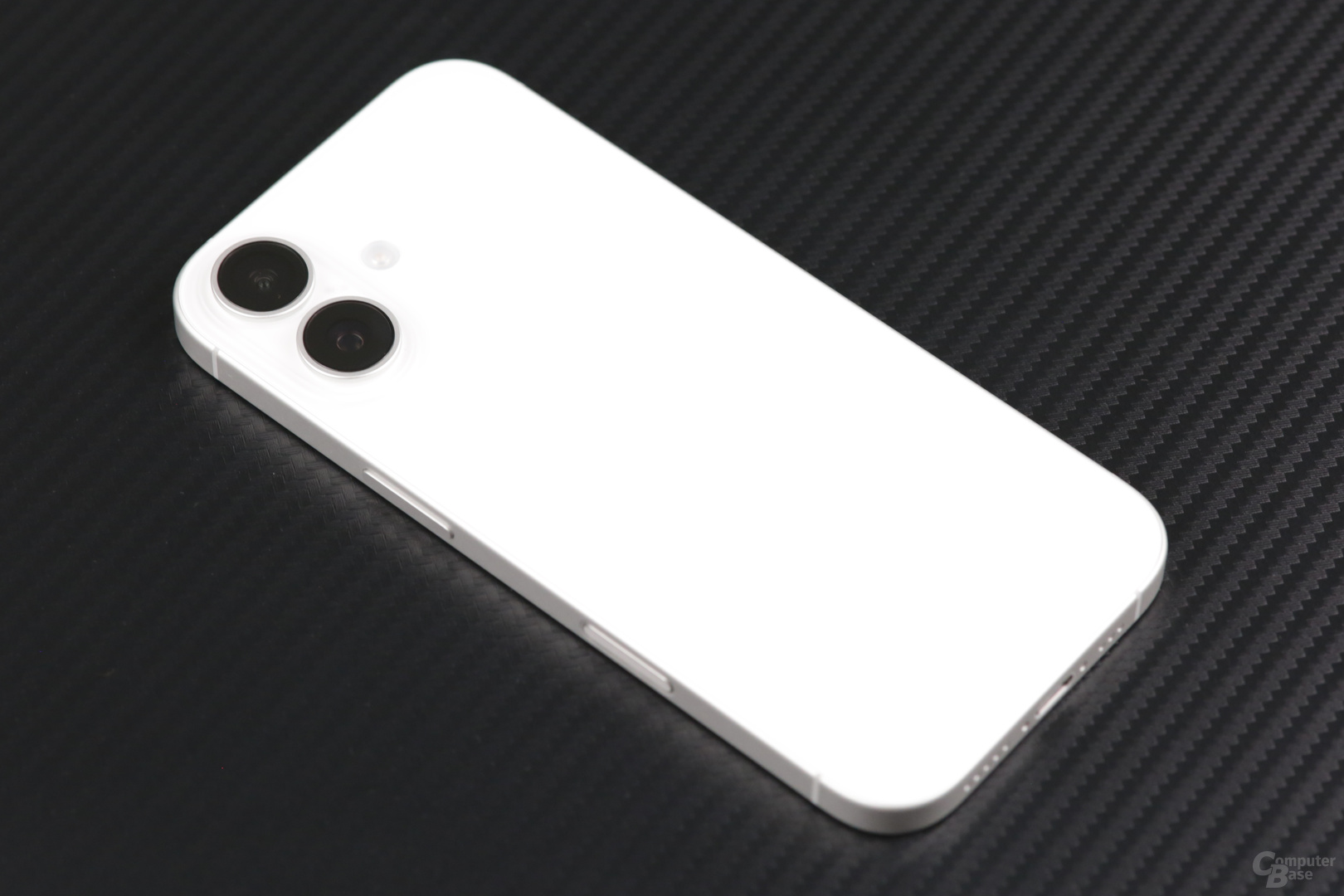
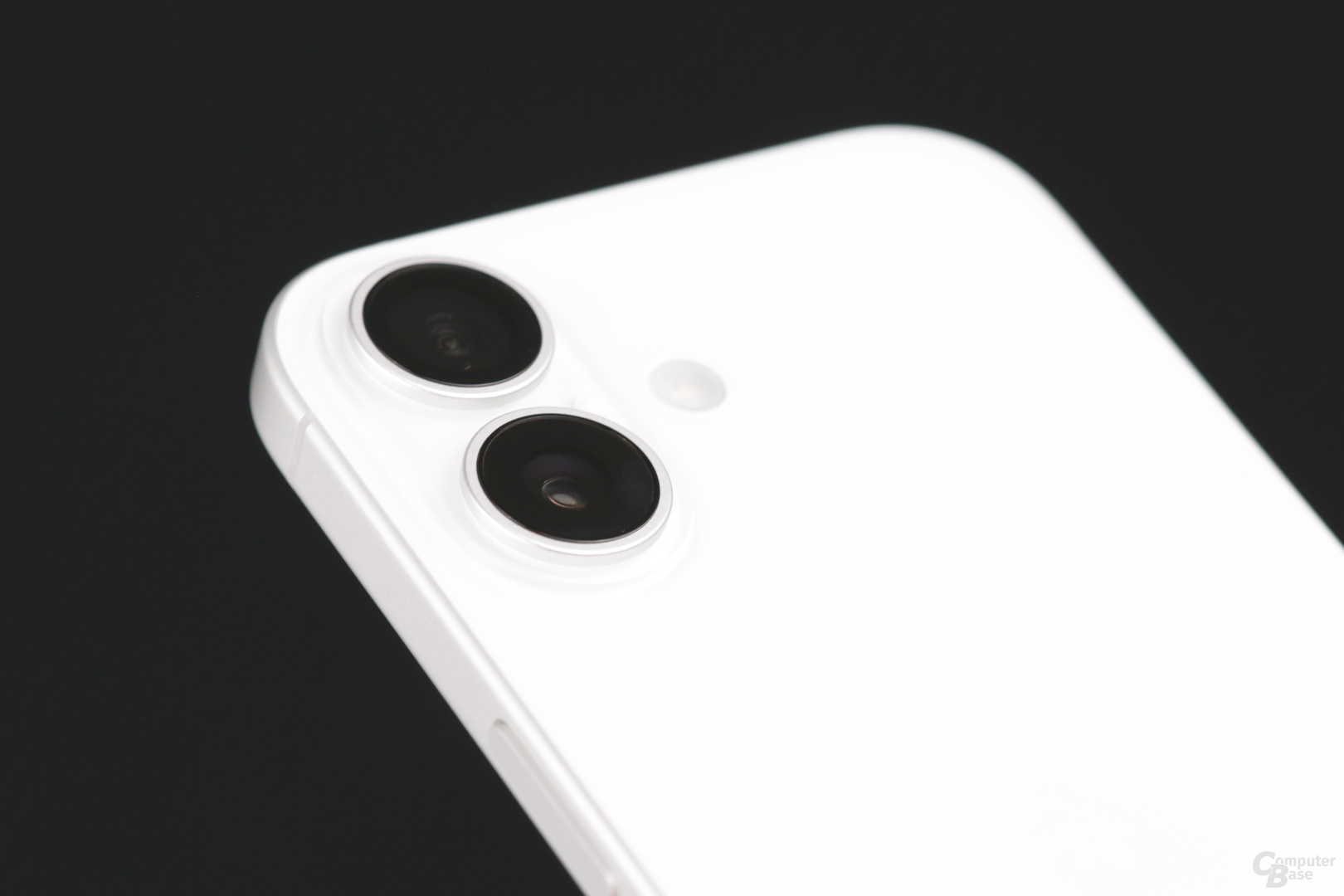
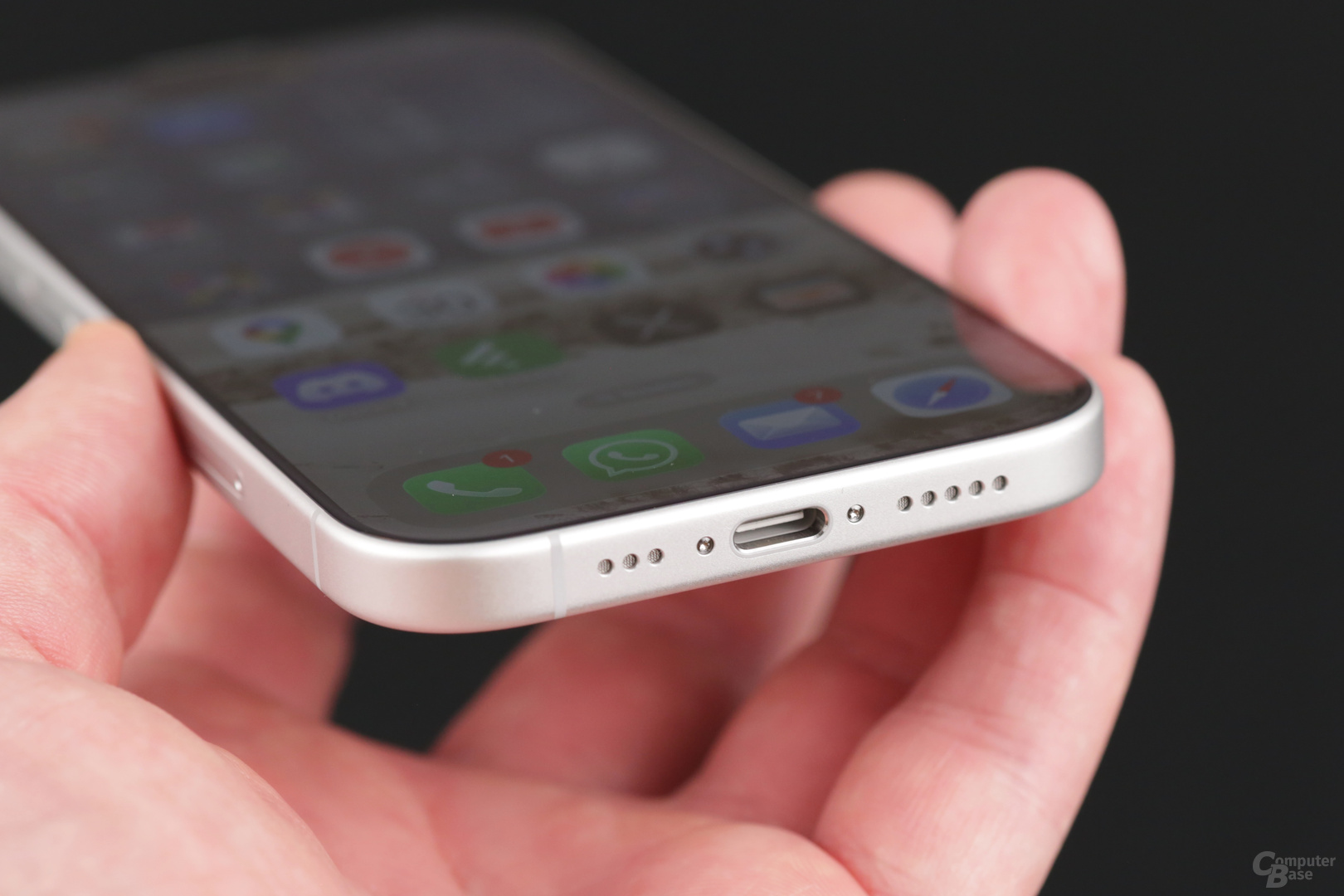
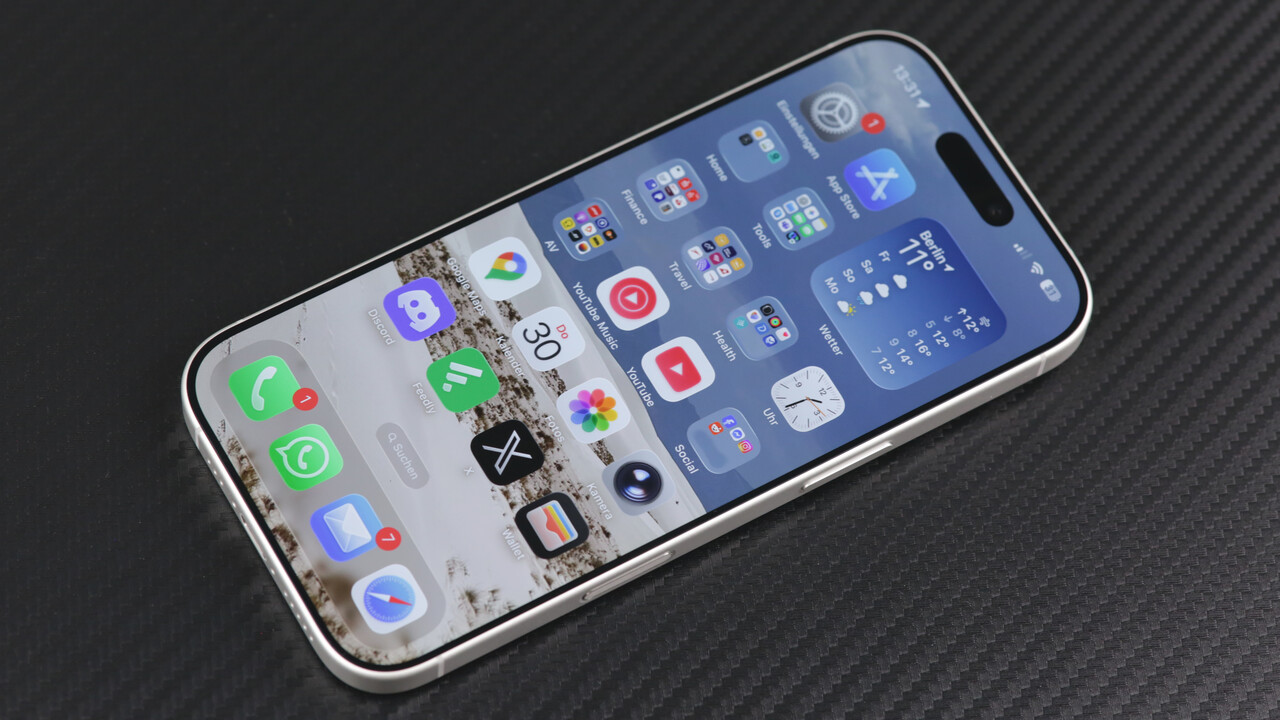
Das iPhone 17 führt das Design des iPhone 16 fort. Es ist damit weder so dünn wie das iPhone Air (Hands-on) noch so neu verpackt wie das iPhone 17 Pro mit Aluminium-Unibody. Die Sandwich-Bauweise des iPhone 17 führt erneut zwei Glasscheiben über einen Aluminiumrahmen zusammen. Das weiße Testgerät war dabei so hochwertig verarbeitet, wie man seit Jahrzehnten von Apple gewohnt ist. Rahmen und Rückseite sind matt ausgeführt, Fingerabdrücke haben deshalb kaum eine Chance und beschränken sich auf den Bildschirm. Auch die Actiontaste (links) und Kamerasteuerung (rechts) sind wieder mit von der Partie.

Das iPhone 17 wächst auf 6,3 Zoll

Die Parallelen zum iPhone 16 sind unverkennbar, und doch ist beim iPhone 17 etwas anders: die Größe. Es fällt anfangs überhaupt nicht auf, dass das iPhone 17 ein größeres Smartphone als das iPhone 16 ist. Nachdem letztes Jahr beim Wechsel vom iPhone 15 Pro auf das iPhone 16 Pro der Bildschirm von 6,1 Zoll auf 6,3 Zoll wuchs, ist Apple diesen Schritt mit dem iPhone 17 jetzt auch beim Basismodell gegangen. Es handelt sich um die erste Veränderung der Bildschirmgröße im Basismodell seit sechs Jahren, als das iPhone 11 mit 6,1 Zoll auf den Markt kam. Zuvor lag das iPhone XS bei 5,8 Zoll.

Weil Apple aber parallel dazu den Bildschirmrand des OLED-Panels reduziert hat, fällt das iPhone 17 nicht eklatant größer, in der Breite sogar etwas schmaler aus. 71,5 × 149,6 × 7,95 mm stehen ehemals 71,6 × 147,6 × 7,80 mm gegenüber. Beim Gewicht hat das iPhone 17 mit 177 g statt 170 g ebenfalls leicht zugelegt.

Das gleiche OLED-Panel wie im iPhone 17 Pro

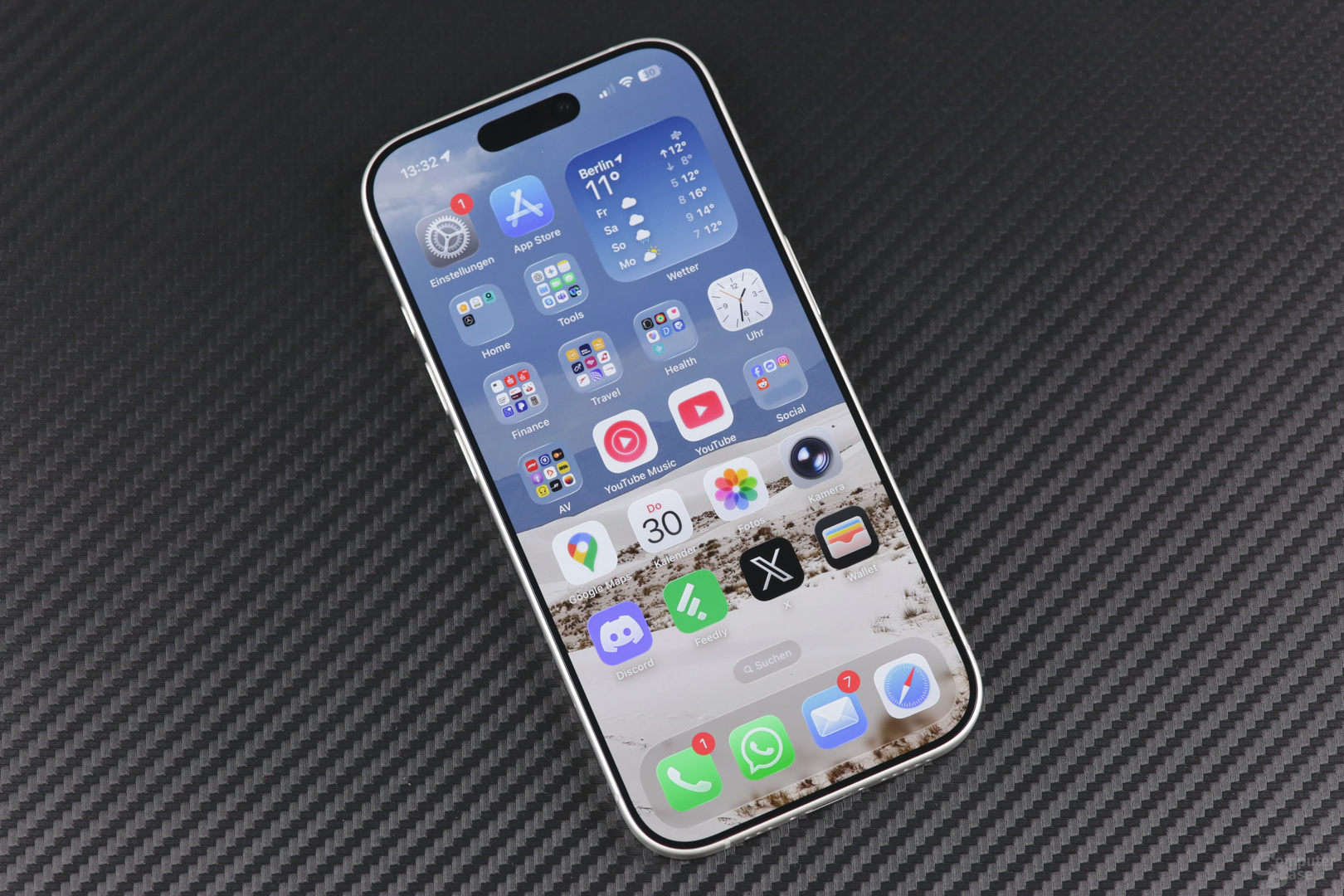
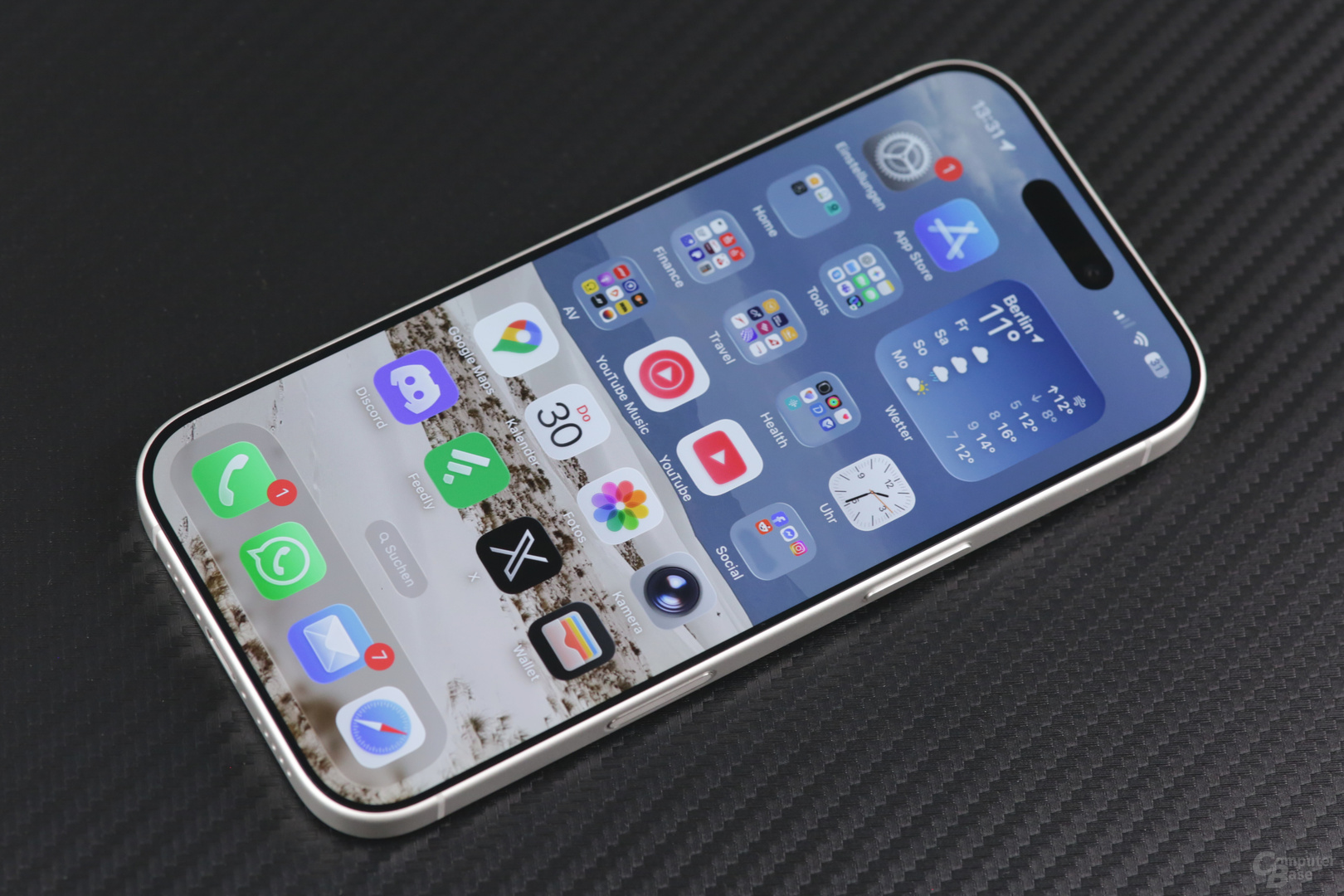
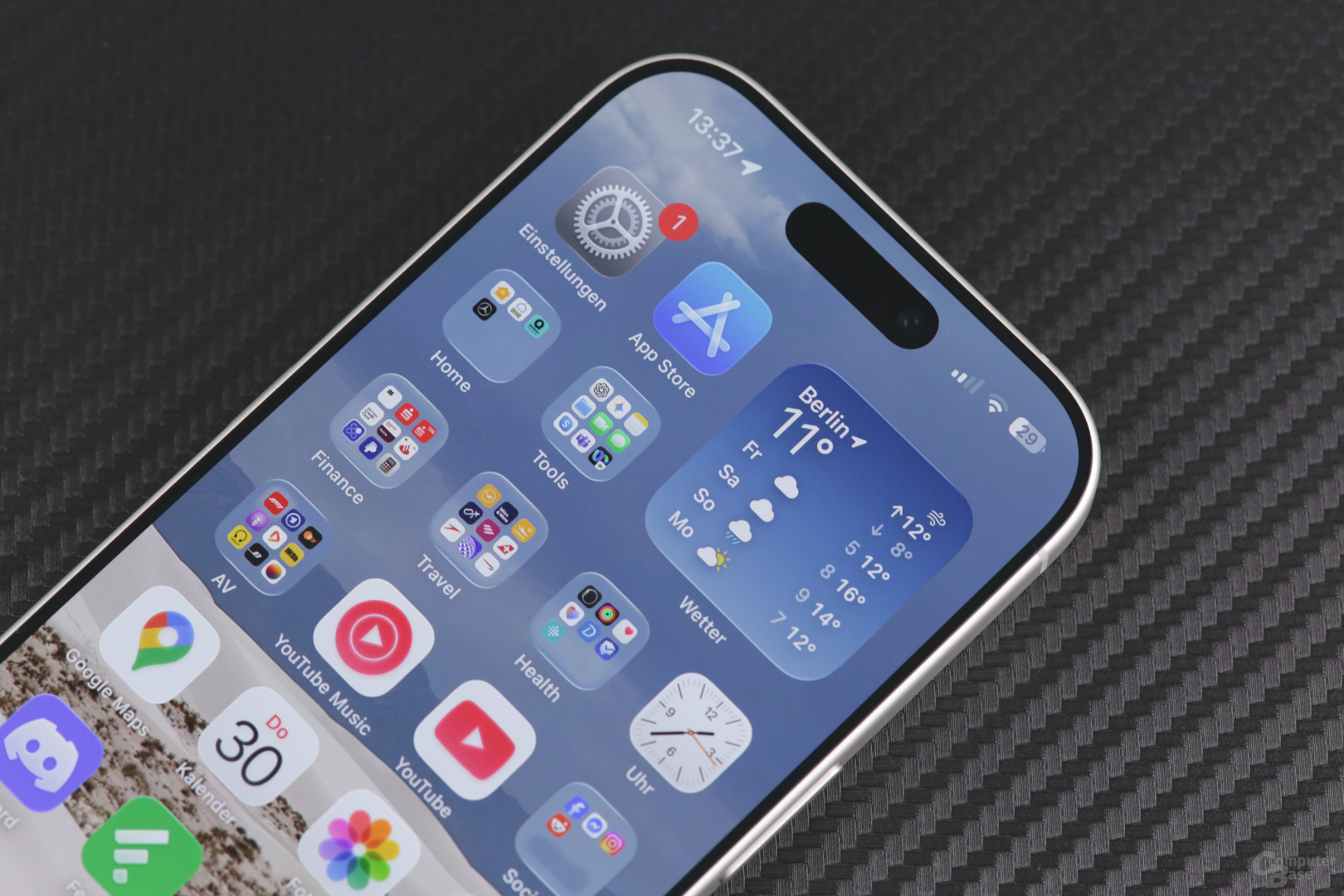
Der neue Bildschirm ist zudem kein „billiger Abklatsch“ des Panels im iPhone 17 Pro. Hätte man zuvor erwarten können, dass Apple eventuell nur ProMotion integriert, aber nicht im vollen Umfang oder ohne Always-on-Funktion, wurde man zur Vorstellung eines Besseren belehrt. In der gesamten aktuellen iPhone-Familie (ohne iPhone 16e) kommt dieselbe Bildschirmtechnologie zum Einsatz, nur eben in unterschiedlichen Größen.

Das iPhone 17 verfügt demnach über ein Always-on-Display, kann die Bildwiederholrate von 1 Hz bis 120 Hz steuern und bietet eine minimale und maximale Helligkeit von 1 cd/m² respektive 3.000 cd/m². Messungen der Redaktion bestätigen diese Steigerung im Vergleich zum iPhone 16. Das neue OLED-Panel kam auf 3.060 cd/m² bei 10 Prozent Weißfläche. Bei 20 Prozent waren es 2.780 cd/m² und im Vollbild noch 1.063 cd/m².

Diagramme
Display-Helligkeit max.
  • Automatikmodus 100% APL:
    • Google Pixel 10 Pro
      2.286
      Weißpunkt: ca. 6.500
    • Google Pixel 10 Pro XL
      2.280
      Weißpunkt: ca. 6.500
    • Google Pixel 10
      2.091
      Weißpunkt: ca. 6.600
    • Google Pixel 9 Pro XL
      2.038
      Weißpunkt: ca. 6.600
    • Google Pixel 9
      2.027
      Weißpunkt: ca. 6.600
    • Google Pixel 9a
      1.903
      Weißpunkt: ca. 7.000
    • Asus ROG Phone 9
      1.635
      Weißpunkt: ca. 7.300
    • Asus ROG Phone 8 Pro Edition
      1.603
      Weißpunkt: ca. 7.500
    • Oppo Find X8 Ultra
      1.594
      Weißpunkt: ca. 7.000
    • Huawei Pura 80 Pro
      1.593
      Weißpunkt: ca. 6.850
    • Huawei Pura 70 Ultra
      1.571
      Weißpunkt: ca. 6.750
    • Huawei Pura 80 Ultra
      1.571
      Weißpunkt: ca. 6.880
    • Nothing Phone (3)
      1.546
      Weißpunkt: ca. 6.660
    • Motorola Razr 60 Ultra (außen)
      1.515
      Weißpunkt: ca. 7.100
    • Motorola Razr 60 Ultra (innen)
      1.506
      Weißpunkt: ca. 7.100
    • Samsung Galaxy S24
      1.505
      Weißpunkt: ca. 6.800
    • Samsung Galaxy Z Fold 6
      1.486
      Weißpunkt: ca. 6.900
    • Samsung Galaxy Z Flip 7
      1.468
      Weißpunkt: ca. 6.800
    • Huawei Mate X6
      1.465
      Weißpunkt: ca. 7.050
    • Samsung Galaxy S25
      1.461
      Weißpunkt: ca. 6.700
    • Redmagic 10 Pro
      1.459
      Weißpunkt: ca. 7.000
    • Samsung Galaxy Z Fold 7
      1.450
      Weißpunkt: ca. 6.800
    • Google Pixel 8 Pro
      1.440
      Weißpunkt: ca. 7.000
    • Samsung Galaxy S25 Ultra
      1.440
      Weißpunkt: ca. 6.800
    • Samsung Galaxy S24 Ultra
      1.430
      Weißpunkt: ca. 7.100
    • Google Pixel 8
      1.426
      Weißpunkt: ca. 6.900
    • Samsung Galaxy S25+
      1.424
      Weißpunkt: ca. 6.900
    • Oppo Find N5 (außen)
      1.365
      Weißpunkt: ca. 7.300
    • Samsung Galaxy S25 Edge
      1.365
      Weißpunkt: ca. 6.900
    • Nothing Phone (3a) Pro
      1.319
      Weißpunkt: ca. 6.800
    • Nothing Phone (3a)
      1.295
      Weißpunkt: ca. 6.700
    • Samsung Galaxy Z Flip 6
      1.286
      Weißpunkt: ca. 7.000
    • Oppo Find N5 (innen)
      1.227
      Weißpunkt: ca. 7.200
    • Oppo Find X8 Pro
      1.209
      Weißpunkt: ca. 7.470
    • Google Pixel Fold
      1.198
      Weißpunkt: ca. 6.200
    • Samsung Galaxy Z Fold 5
      1.196
      Weißpunkt: ca. 6.500
    • Samsung Galaxy S23
      1.193
      Weißpunkt: ca. 6.600
    • Samsung Galaxy S23 Ultra
      1.184
      Weißpunkt: ca. 6.700
    • Samsung Galaxy S22+
      1.182
      Weißpunkt: ca. 6.700
    • Apple iPhone 16e
      1.163
      Weißpunkt: ca. 6.500
    • Samsung Galaxy S22 Ultra
      1.161
      Weißpunkt: ca. 6.700
    • Apple iPhone 13 Pro
      1.063
      Weißpunkt: ca. 6.800
    • Apple iPhone 17
      1.063
      Weißpunkt: ca. 6.500
    • Apple iPhone 16
      1.062
      Weißpunkt: ca. 6.500
    • Apple iPhone 17 Pro Max
      1.057
      Weißpunkt: ca. 6.500
    • Apple iPhone 13 Pro Max
      1.056
      Weißpunkt: ca. 6.300
    • Apple iPhone 16 Pro Max
      1.056
      Weißpunkt: ca. 6.500
    • Apple iPhone 15
      1.054
      Weißpunkt: ca. 6.700
    • Apple iPhone 15 Pro Max
      1.052
      Weißpunkt: ca. 6.700
    • Apple iPhone 14 Pro Max
      1.049
      Weißpunkt: ca. 6.300
    • Xiaomi 15
      1.047
      Weißpunkt: ca. 7.400
    • Apple iPhone Air
      1.040
      Weißpunkt: ca. 6.500
    • Nothing Phone (2a)
      1.032
      Weißpunkt: ca. 6.500
    • Nothing Phone (2)
      1.022
      Weißpunkt: ca. 6.100
    • Asus ROG Phone 7 Ultimate
      1.013
      Weißpunkt: ca. 7.300
    • Samsung Galaxy A54
      1.012
      Weißpunkt: ca. 7.100
    • Google Pixel 7a
      1.009
      Weißpunkt: ca. 6.300
    • Motorola Razr 40
      1.007
      Weißpunkt: ca. 6.800
    • Samsung Galaxy Z Fold 4
      1.004
      Weißpunkt: ca. 6.700
    • Google Pixel 7 Pro
      990
      Weißpunkt: ca. 6.400
    • Samsung Galaxy S21 Ultra
      973
      Weißpunkt: ca. 6.700
    • Samsung Galaxy Note 20 Ultra
      969
      Weißpunkt: ca. 7.300
    • Google Pixel 7
      927
      Weißpunkt: ca. 6.200
    • Samsung Galaxy S22
      911
      Weißpunkt: ca. 6.800
    • Samsung Galaxy Z Flip 5
      905
      Weißpunkt: ca. 6.500
    • Samsung Galaxy Z Flip 3
      894
      Weißpunkt: ca. 6.600
    • Xiaomi Mi 11 Ultra
      878
      Weißpunkt: ca. 7.100
    • Samsung Galaxy Z Flip 4
      873
      Weißpunkt: ca. 6.600
    • Apple iPhone 14
      866
      Weißpunkt: ca. 6.300
    • Apple iPhone 13 mini
      858
      Weißpunkt: ca. 6.200
    • Apple iPhone 12 Pro Max
      854
      Weißpunkt: ca. 6.300
    • Apple iPhone 12 Pro
      842
      Weißpunkt: ca. 6.300
    • Google Pixel 6a
      816
      Weißpunkt: ca. 6.500
    • Fairphone 5
      803
      Weißpunkt: ca. 6.900
    • Apple iPhone 11 Pro Max
      797
      Weißpunkt: ca. 6.900
    • OnePlus 9 Pro
      787
      Weißpunkt: ca. 6.800
    • Asus ROG Phone 6
      784
      Weißpunkt: ca. 7.200
    • Xiaomi Mi 11
      783
      Weißpunkt: ca. 6.900
    • Blackview Hero 10
      778
      Weißpunkt: ca. 6.950
    • Google Pixel 6 Pro
      777
      Weißpunkt: ca. 6.500
    • OnePlus 9
      776
      Weißpunkt: ca. 6.700
    • OnePlus 8 Pro
      773
      Weißpunkt: ca. 7.400
    • Samsung Galaxy A52 5G
      772
      Weißpunkt: ca. 6.800
    • Google Pixel 6
      769
      Weißpunkt: ca. 6.200
    • Qualcomm Smartphone for Snapdragon Insiders
      765
      Weißpunkt: ca. 7.200
    • Samsung Galaxy S20
      763
      Weißpunkt: ca. 7.200
    • Samsung Galaxy S20 Ultra
      762
      Weißpunkt: ca. 7.200
    • Asus Zenfone 9
      757
      Weißpunkt: ca. 7.100
    • OnePlus 8T
      753
      Weißpunkt: ca. 6.800
    • Samsung Galaxy S20+
      752
      Weißpunkt: ca. 7.300
    • Fairphone 6
      746
      Weißpunkt: ca. 6.570
    • Oppo Find X3 Pro
      745
      Weißpunkt: ca. 7.200
    • Unihertz Titan
      718
      Weißpunkt: ca. 6.900
    • Google Pixel 4a
      701
      Weißpunkt: ca. 7.000
    • LG Wing
      688
      Weißpunkt: ca. 7.200
    • Google Pixel 5
      687
      Weißpunkt: ca. 6.500
    • Apple iPhone Xr
      686
      Weißpunkt: ca. 7.000
    • Cat S61
      672
      Weißpunkt: ca. 7.400
    • OnePlus 7T
      672
      Weißpunkt: ca. 7.300
    • Samsung Galaxy Z Fold 2
      672
      Weißpunkt: ca. 7.400
    • Gigaset GX290
      671
      Weißpunkt: ca. 9.800
    • Apple iPhone 11
      661
      Weißpunkt: ca. 6.800
    • Google Pixel 4a 5G
      655
      Weißpunkt: ca. 6.600
    • Apple iPhone 12
      653
      Weißpunkt: ca. 6.300
    • Apple iPhone Xs Max
      644
      Weißpunkt: ca. 6.900
    • Apple iPhone 12 mini
      643
      Weißpunkt: ca. 6.300
    • Nothing Phone (1)
      643
      Weißpunkt: ca. 6.100
    • Samsung Galaxy Note 9
      637
      Weißpunkt: ca. 7.800
    • Motorola Moto G8 Plus
      634
      Weißpunkt: ca. 7.700
    • OnePlus Nord
      629
      Weißpunkt: ca. 7.400
    • Samsung Galaxy S9+
      624
      Weißpunkt: ca. 7.800
    • Samsung Galaxy S9
      622
      Weißpunkt: ca. 7.700
    • Huawei Mate 20 Pro
      616
      Weißpunkt: ca. 7.300
    • Samsung Galaxy Note 10+
      616
      Weißpunkt: ca. 7.200
    • OnePlus Nord 2
      610
      Weißpunkt: ca. 7.100
    • OnePlus 6
      607
      Weißpunkt: ca. 7.900
    • Nokia XR20
      592
      Weißpunkt: ca. 8.150
    • Motorola Moto G6
      589
      Weißpunkt: ca. 8.800
    • OnePlus 7 Pro
      585
      Weißpunkt: ca. 7.300
    • LG Velvet
      575
      Weißpunkt: ca. 7.800
    • Samsung Galaxy XCover6 Pro
      575
      Weißpunkt: ca. 7.500
    • Sony Xperia XZ3
      569
      Weißpunkt: ca. 7.900
    • Sony Xperia 5 III
      563
      Weißpunkt: ca. 7.200
    • Samsung Galaxy S10e
      562
      Weißpunkt: ca. 7.400
    • Cat S52
      553
      Weißpunkt: ca. 6.900
    • LG G7 ThinQ
      546
      Weißpunkt: ca. 9.300
    • Cat S62 Pro
      543
      Weißpunkt: ca. 8.650
    • Sony Xperia 1 II
      539
      Weißpunkt: ca. 8.400
    • Sony Xperia 5 II
      536
      Weißpunkt: ca. 7.500
    • Huawei P30 Pro
      531
      Weißpunkt: ca. 7.800
    • Huawei P20 Pro
      527
      Weißpunkt: ca. 6.900
    • Asus ZenFone 6
      525
      Weißpunkt: ca. 7.400
    • Samsung Galaxy S10+
      524
      Weißpunkt: ca. 7.200
    • Oppo Reno2
      521
      Weißpunkt: ca. 8.000
    • Samsung Galaxy S10
      519
      Weißpunkt: ca. 7.200
    • Motorola Moto G7 Plus
      518
      Weißpunkt: ca. 8.200
    • Huawei P40 Pro
      516
      Weißpunkt: ca. 7.500
    • Samsung Galaxy A50
      515
      Weißpunkt: ca. 7.100
    • Motorola One Vision
      510
      Weißpunkt: ca. 8.000
    • Cat S42
      510
      Weißpunkt: ca. 6.900
    • Oppo A91
      508
      Weißpunkt: ca. 7.600
    • Doogee V20
      508
      Weißpunkt: ca. 8.690
    • Sony Xperia XZ2 Compact
      506
      Weißpunkt: ca. 7.900
    • Motorola Moto G7 Power
      506
      Weißpunkt: ca. 6.900
    • Vivo X60 Pro
      503
      Weißpunkt: ca. 7.600
    • Gigaset GS4
      501
      Weißpunkt: ca. 9.700
    • Oppo Find X2 Pro
      482
      Weißpunkt: ca. 7.900
    • Nokia 7 Plus
      473
      Weißpunkt: ca. 7.800
    • Motorola Moto G7
      473
      Weißpunkt: ca. 7.900
    • Xiaomi Mi Mix 2S
      472
      Weißpunkt: ca. 7.800
    • Motorola One
      470
      Weißpunkt: ca. 7.700
    • Telekom T Phone 2
      465
      Weißpunkt: ca. 8.360
    • Samsung Galaxy A6
      463
      Weißpunkt: ca. 8.100
    • Gigaset GS5
      456
      Weißpunkt: ca. 8.385
    • LG G8s
      455
      Weißpunkt: ca. 7.800
    • Nokia 6.1
      452
      Weißpunkt: ca. 9.500
    • Motorola Moto Z3 Play
      444
      Weißpunkt: ca. 7.500
    • OnePlus 6T
      431
      Weißpunkt: ca. 8.100
    • Google Pixel 4 XL
      428
      Weißpunkt: ca. 6.900
    • BlackBerry Key2
      420
      Weißpunkt: ca. 7.800
    • Google Pixel 3a
      406
      Weißpunkt: ca. 6.900
    • Google Pixel 3 XL
      400
      Weißpunkt: ca. 7.200
    • HTC U12+
      399
      Weißpunkt: ca. 7.500
    • Sony Xperia 1
      381
      Weißpunkt: ca. 7.600

Käufer eines iPhone 17 erhalten somit den gleichen sehr guten Bildschirm, für den Interessenten bislang bei einem Pro-Modell deutlich mehr Geld ausgeben musste. Das war, obwohl es sich „nur“ um Apples Basismodell handelt, in dieser Preisklasse längst überfällig und stellt eines der größte Upgrades für den aktuellen Jahrgang dar.

📊 Intel, AMD oder Nvidia? Mach' jetzt noch mit bei unserer großen Jahresumfrage!